
Managing a grassroots football club means juggling dozens of conversations across multiple platforms. Coaches send training updates via WhatsApp. Treasurers email payment reminders. Managers text fixture changes. Parents miss critical information because it arrived in the wrong group chat at the wrong time.
This fragmented communication creates unnecessary stress for volunteer administrators and confusion for families. When a club operates across five different messaging apps, three email chains, and a Facebook group, important details inevitably slip through the cracks. The solution lies not in adding another communication channel, but in consolidating everything into a single, purpose-built football team app that serves every member of the club community.
Why Traditional Communication Methods Fail Grassroots Clubs
Most grassroots football clubs inherit their communication systems organically. Someone creates a WhatsApp group for the under-9s. Another volunteer starts a Facebook page. The club secretary maintains an email list. Within months, the club operates across six platforms with no clear system for who receives what information.
This approach creates three fundamental problems. First, message overload overwhelms parents who receive 40+ notifications daily across multiple platforms. Second, critical information gets buried beneath casual chat and social posts. Third, new families joining mid-season struggle to access historical information about fixtures, kit requirements, or club policies.
The administrative burden falls hardest on volunteer managers who must repeat the same information across multiple channels. A simple fixture change requires updating the website, posting in three WhatsApp groups, sending emails to absent parents, and updating the Facebook page. This duplication wastes hours that volunteers could spend coaching or supporting players.
Traditional methods also exclude families with limited digital literacy or those who don't use specific platforms. A parent without Facebook misses club social events. Someone who muted the WhatsApp group due to excessive chat misses their child's match cancellation. Effective club communication must reach everyone reliably, regardless of their platform preferences.
The Core Functions Every Club App Must Deliver
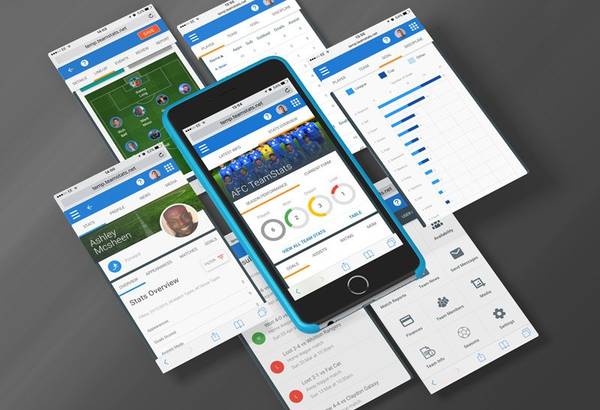
A central football team app needs to consolidate five essential functions that currently scatter across multiple platforms. These aren't luxury features - they represent the minimum requirements for efficient grassroots football club operation.
Fixture and Training Management
Fixture and training management forms the foundation. Parents need instant access to when and where their child plays or trains, with automatic notifications for changes. Coaches require tools to confirm attendance, track who's available for selection, and communicate tactical plans. The system must handle multiple age groups simultaneously without creating confusion about which fixture applies to which team.
Player Availability Tracking
Player availability tracking eliminates the endless "who's available Saturday?" messages that clog group chats. Instead of chasing 16 individual responses, managers receive a clear dashboard showing confirmed availability for upcoming fixtures. This transparency helps coaches plan team selection and football formations days before match day, rather than scrambling in the car park.
Club-Wide Announcements
Club-wide announcements need priority routing separate from casual conversation. When the club closes due to weather, cancels training for a pitch inspection, or shares urgent safeguarding information, that message must reach every relevant family immediately. The app should distinguish between urgent club business and general updates, ensuring critical information never drowns in chat noise.
Document and Resource Storage
Document and resource storage provides a permanent home for essential information that families need repeatedly. Kit sizing guides, club policies, fixture lists, training schedules, and contact details should live in an accessible location rather than buried in old email threads. New families joining mid-season particularly benefit from this centralised knowledge base.
Payment and Financial Communication
Payment and financial communication streamlines the administrative burden around subscriptions, match fees, and tournament costs. Rather than chasing individual payments through bank transfers and cash, clubs need transparent systems showing who's paid, who owes, and what the money covers. This visibility protects volunteer treasurers and builds trust with families.
Building Adoption Across Different User Groups
The technical capabilities of a team management app matter less than achieving universal adoption across the club. A sophisticated platform that only half the parents use creates more problems than it solves. Successful implementation requires understanding the distinct needs of different user groups.
Parent users need simplicity above all else. They want immediate answers to three questions: when does my child play, where do they need to be, and what do they need to bring? The app must deliver this information faster and more reliably than checking multiple WhatsApp groups. Onboarding should take under two minutes, with no technical knowledge required. Push notifications must work flawlessly - if parents miss a fixture change because the app failed to alert them, they'll revert to old communication methods immediately.
Coach and manager users require deeper functionality without added complexity. They need to see availability at a glance, communicate tactical information to specific groups (defenders only, starting eleven, etc.), and track player development over time. The interface should recognise that many grassroots football coaches are parent volunteers with limited time, not professional administrators. Features that require ten clicks or complex navigation simply won't get used during a busy match day.
Club administrator users need oversight across all teams and age groups. They must broadcast club-wide announcements, manage multiple coaches' access, and maintain accurate contact information for safeguarding purposes. The system should provide visibility without requiring constant manual updates - when a coach adds a new player to the under-11s, that family automatically receives club-wide communications.
Player users benefit from age-appropriate engagement with the platform. Younger players might simply enjoy seeing their name in the starting lineup, while teenagers appreciate direct tactical feedback and performance tracking. The app shouldn't treat players as passive recipients of information, but as active participants in their football journey.
Transitioning from Fragmented Systems to Unified Platforms
Moving a club from established communication patterns to a new centralised system requires careful change management. Volunteers and families have invested time learning existing systems, however imperfect. The transition must demonstrate immediate value rather than creating temporary disruption.
The most successful approach introduces the new platform alongside existing systems initially, rather than forcing an immediate switch. Run both in parallel for 4-6 weeks, ensuring the app delivers every piece of information that previously came through WhatsApp or email. This redundancy proves reliability before families depend entirely on the new system.
Identify and recruit "platform champions" within each age group - typically the most engaged parents or coaches who can answer questions and encourage adoption. These advocates provide peer support more effectively than top-down mandates from club administrators. When parents see other families successfully using the app, they're more likely to embrace it themselves.
Demonstrate quick wins early in the transition. Use the app to solve a visible problem that the old system handled poorly - perhaps managing availability for a tournament, or coordinating a club-wide social event. When families experience tangible benefits within the first week, they develop trust in the platform's value.
Address the inevitable technical questions promptly and publicly. When someone asks "how do I mark my child unavailable?", answer in a way that helps everyone learn the system. Consider short video tutorials for common tasks, recognising that written instructions don't suit all learning styles. The easier adoption becomes, the faster the club reaches critical mass where the app becomes the default communication channel.
Set a clear deadline for full transition, typically 6-8 weeks after introduction. Announce that after this date, fixture changes and team selections will only be communicated through the app. This creates necessary urgency while giving families ample time to adapt. Maintain a grace period where administrators still respond to questions via old channels, but gently redirect people to the app for information.
Maintaining Engagement Beyond Initial Adoption
Getting families to download a football team app represents only half the challenge. Sustaining active engagement throughout the season requires ongoing value delivery and community building within the platform.
Regular, relevant content keeps the app front-of-mind. Share match reports with photos after fixtures, post training session highlights, and celebrate player achievements. This transforms the app from a purely administrative tool into a community hub where families want to check in regularly. The more positive associations families build with the platform, the more reliably they'll notice important administrative notifications.
Respect notification boundaries to prevent app fatigue. Users who receive 15+ daily notifications will mute them, defeating the platform's core purpose. Distinguish between urgent alerts (fixture cancellations, safety issues) and general updates (match reports, social events). Allow families to customise notification preferences so they receive critical information without being overwhelmed by every post.
Encourage two-way communication rather than treating the app as a broadcast channel. When coaches ask questions, request feedback on training times, or seek volunteer help, they signal that families' voices matter. This engagement builds investment in the platform and the club more broadly. Parents who feel heard are more likely to stay actively involved with the app and the team.
Regularly audit who's actively using the platform and proactively reach out to disengaged families. If a parent hasn't opened the app in three weeks, they'll likely miss their child's next fixture change. A quick personal message - "I noticed you haven't been on the app lately, is everything working OK?" - often reveals technical issues or confusion that simple support can resolve.
How Digital Tools Strengthen Grassroots Football Communities
The ultimate purpose of consolidating club communication isn't administrative efficiency - it's creating more time and energy for what matters most in grassroots football. Every hour volunteers spend managing fragmented communication systems is an hour not spent coaching, supporting player development, or building club culture.
When football coaching apps handle routine administrative tasks effectively, volunteers can focus on meaningful interactions with players and families. Coaches arrive at training having already reviewed availability and planned appropriate sessions, rather than spending the first 15 minutes taking a register and answering logistical questions. Managers can invest energy in player welfare conversations rather than chasing payment reminders through multiple channels.
Centralised platforms also create valuable historical records that benefit clubs long-term. When a new volunteer takes over managing the under-13s, they inherit complete fixture histories, player contact information, and established communication patterns rather than starting from scratch. This continuity helps clubs maintain standards as volunteers naturally rotate through roles.
The data generated through consistent platform use reveals patterns that improve club operations. If 40% of players consistently mark themselves unavailable for Sunday morning fixtures, perhaps the club should advocate with the league for Saturday slots. When training attendance drops during exam periods, coaches can plan lighter sessions rather than complex tactical work. These insights only emerge when clubs capture information systematically rather than through scattered conversations.
Most importantly, unified communication platforms reduce the barriers that prevent families from engaging fully with grassroots football. When a single-parent family can check fixture times during their work break rather than scrolling through 200 WhatsApp messages, their child is more likely to attend consistently. When new families joining mid-season can access all club information in one place, they integrate into the community faster. Digital tools, properly implemented, make grassroots football more accessible and inclusive.
Choosing the Right Platform for Your Club's Needs
Not all team management platforms suit grassroots football's unique requirements. Systems designed for professional clubs often include unnecessary complexity that overwhelms volunteer administrators. Consumer messaging apps lack the structured features clubs need for effective organisation. The right solution balances comprehensive functionality with genuine ease of use.
Evaluate platforms based on real-world usage patterns rather than feature lists. A system might offer 50 different functions, but if accessing the three most important features requires navigating complex menus, volunteers won't use it consistently. Test how quickly you can complete common tasks: marking a player available, sending a fixture change notification, or viewing next week's training attendance. If these actions take more than three taps, look elsewhere.
Consider the platform's approach to grassroots football specifically. Systems built for professional sports often assume dedicated administrators, regular training on the platform, and players who engage with technology daily. Grassroots clubs need tools designed for parent volunteers who manage teams alongside full-time jobs, and families with varying levels of digital literacy.
Assess the true cost beyond subscription fees. Some platforms charge per player, making them prohibitively expensive for clubs running multiple age groups. Others require significant setup time or ongoing maintenance that consumes volunteer hours. The most cost-effective solution minimises both financial expense and time investment, recognising that volunteer time represents a club's most precious resource.
Check whether the platform integrates with league systems your club already uses. Many grassroots football leagues provide fixture information through their own platforms. If your team management app can import this data automatically rather than requiring manual entry, clubs save hours each season and reduce errors from transcription mistakes. Understanding what is grassroots football helps clubs recognise the specific needs their platform must address.
Conclusion
The fragmented communication systems that plague most grassroots football clubs aren't inevitable - they're solvable problems that the right technology addresses effectively. When clubs consolidate fixture management, availability tracking, announcements, document storage, and financial communication into a single platform, they eliminate countless hours of duplicated effort and reduce the stress that drives volunteers toward burnout.
Success depends not on choosing the most feature-rich platform, but on achieving universal adoption across the entire club community. This requires understanding the distinct needs of parents, coaches, administrators, and players, then implementing change management that demonstrates immediate value rather than temporary disruption. The clubs that transition most successfully introduce new systems gradually, recruit platform champions, and maintain engagement through regular, relevant content that transforms the app from an administrative tool into a community hub.
The benefits extend far beyond administrative efficiency. When volunteers spend less time managing communication chaos, they invest more energy in coaching, player development, and building positive club culture. When families can access all club information reliably in one place, grassroots football becomes more accessible and inclusive. When clubs capture information systematically, they develop institutional knowledge that survives volunteer turnover and improves operations long-term.
For clubs ready to move beyond the chaos of WhatsApp groups, email chains, and Facebook posts, TeamStats provides a purpose-built solution designed specifically for grassroots football's unique requirements. The platform consolidates every essential function clubs need whilst maintaining the simplicity that ensures universal adoption across families and volunteers. By building a central football team app that genuinely serves every club member, grassroots teams can focus on what matters most - developing players and strengthening football communities.
═══════════════════════════════════════════════════════════════