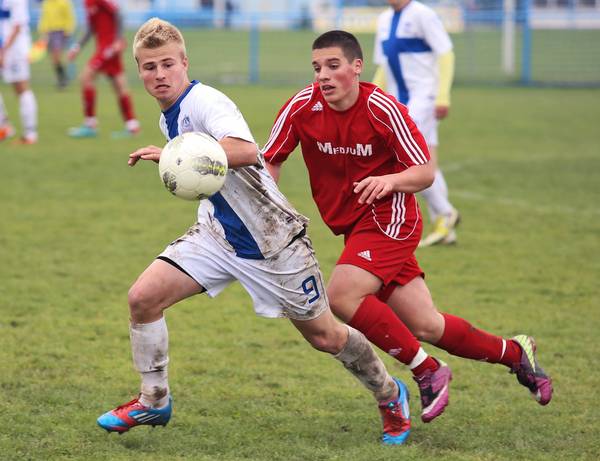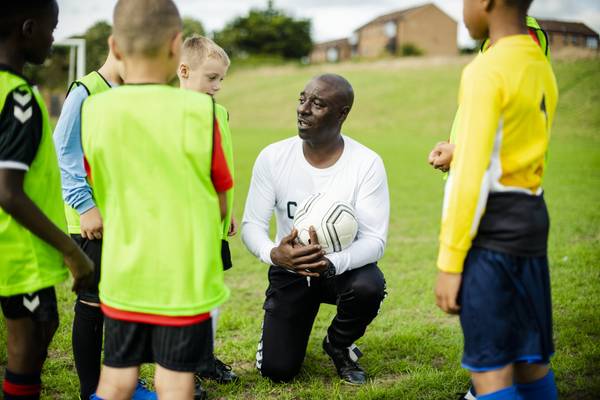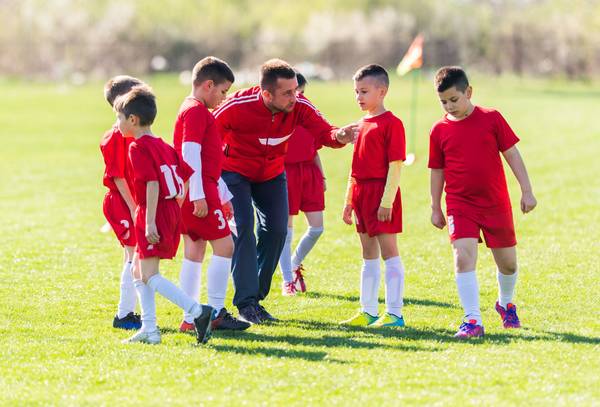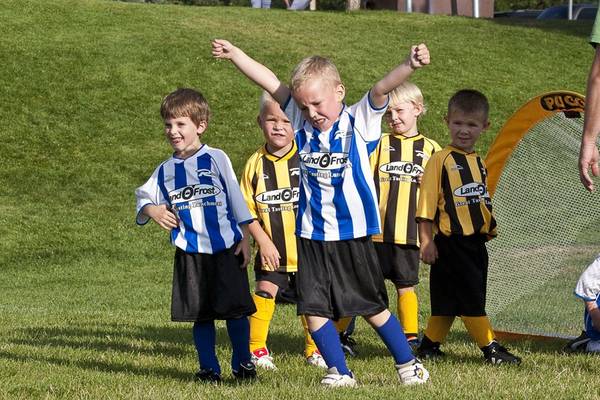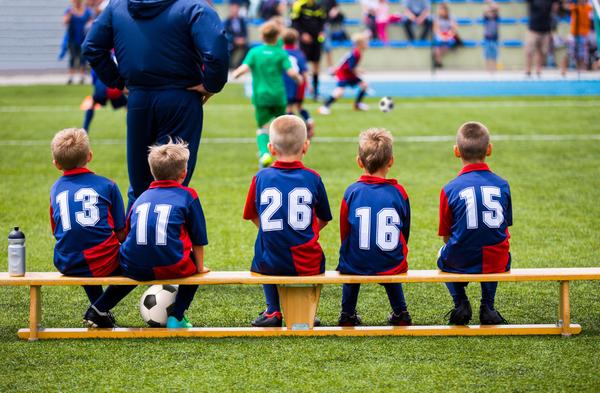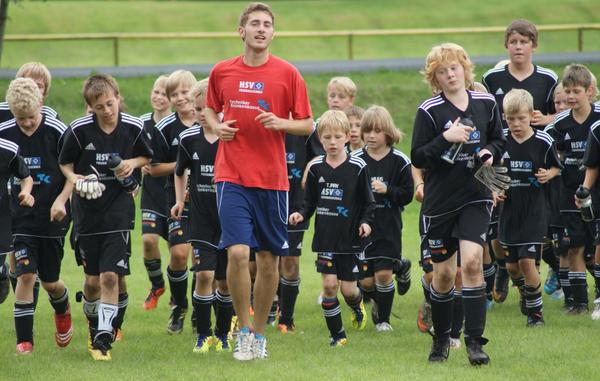
Somebody at your club took a lot of photographs on Sunday morning. Very few of them can be used.
Not because they are bad, though a February pitch at half past nine does not flatter anybody. Because the pool of publishable images at a youth club is far smaller than the pool of images taken, and most volunteers running a club account discover this the hard way usually after posting something they then have to take down.
That gap between what was photographed and what can go out is the actual problem in grassroots club media. It is a consent problem before it is a quality problem, and once you have worked through it you are left with a handful of shots that need to carry a whole season.
An AI Image Editor with practical editing capabilities from Higgsfield is genuinely useful at that point, and it is worth being precise about where it helps and where it must not be used.

Why is the usable pool so much smaller?
Because a publishable photograph has to clear several filters at once, and most do not.
Every identifiable child in the frame needs current written parental consent covering social media specifically not general club consent, and not consent given two seasons ago.
Opposition players are almost always out. You do not hold consent for another club's children, and a match photograph tends to contain several of them.
Some parents decline, which is entirely their right, and it means the child who scored the winner may be the one child you cannot show.
Certain settings are off-limits regardless changing rooms and dressing-room celebrations are not appropriate for youth publication.
And guidance advises against images showing jewellery, since wearing it while playing is against the Laws of the Game and a safety matter.
Apply all of that to a morning's photographs and the survivors are a small set. Which is why getting more out of each one matters more at a grassroots club than almost anywhere else.
What does the consent position actually require?
Worth stating plainly, because clubs get this wrong in predictable ways.
Written parental consent for each child, collected at the start of the season, typically through the club's annual membership and consent form.
Renewed annually. Children grow up and family circumstances change.
Captions matter as much as images. First name and shirt number is acceptable. Full name is not, particularly for under-thirteen. "Mia" rather than "Mia Thompson."
No location detail. "Saturday training" is fine. Naming the ground and the time is not.
Withdrawal is immediate. If a parent asks for an image to be removed, it comes down straight away not after a discussion about whether consent was previously given.
And no tagging children's accounts, with comments on posts featuring children either disabled or actively moderated.
None of that is affected by how a photograph is edited. It governs whether the photograph can be published at all, and it applies before an AI Image Editor is opened.
Why are the photos technically poor as well?
Because grassroots football happens in conditions nobody would choose to photograph in.
The light is terrible. Morning kick-offs from October to March, under grey clouds, sometimes under floodlights that turn everything orange.
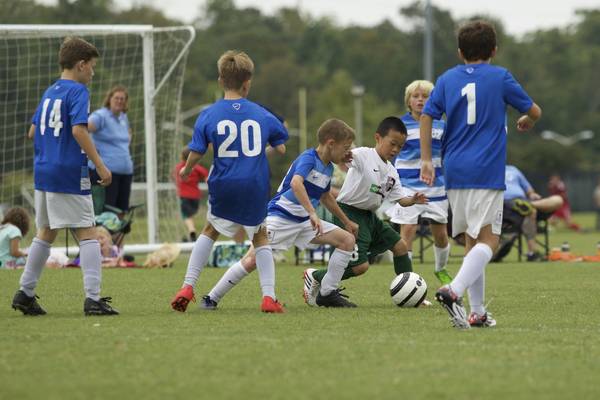
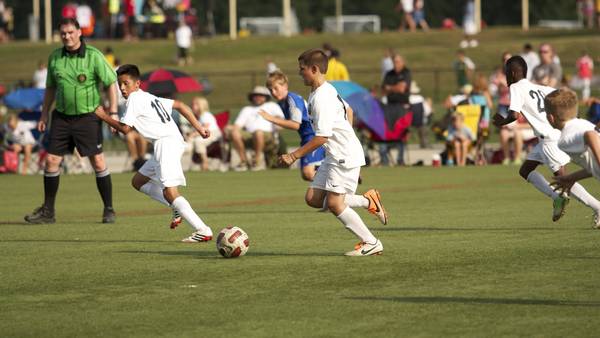
The distance is wrong. Phones photograph from the touchline, so the action is small in the frame and cropping in destroys the resolution.
Everything moves. Low light plus moving children produces either motion blur or a very noisy image.
And the background is a car park. Grassroots pitches are surrounded by fences, bins, parked cars and other people's matches.
Those are technical faults rather than failures of the person holding the phone. Which is exactly the category an AI Image Editor addresses.
What can an AI Image Editor genuinely fix?
Most of the list above, and quickly.
Exposure recovery. Higgsfield and comparable tools lift a dark winter shot without turning it into noise, which is the single most useful operation on grassroots football photographs.
Colour correction. Neutralising the orange cast from floodlights and the flat grey of an overcast morning.
Noise reduction. This has improved enormously and it is what makes a heavily cropped touchline photo usable at all.
Sharpening a soft shot in an AI Image Editor enough to publish at social media size, though not beyond.
Straightening, because handheld touchline photographs are never level and an AI Image Editor levels them in one click.
Consistency across a set, so a season's posts look like one club rather than forty separate Sundays.
Higgsfield handles this within a wider AI creative suite, which for a club volunteer mostly means the corrections and the export sizes happen in one place rather than across three apps on a Sunday evening.
How do you make a small set go further?
This is the practical heart of it, given how few images clear the consent check.
Crop several images from one photograph. A wide shot of a goal celebration can yield a tight action crop, a wider team crop and a detail shot of the kit or the ball. An AI Image Editor recovering resolution after a heavy crop is what makes that viable.
Reuse across formats. The same image works as a square post, a vertical story and a wide website header if it is cropped deliberately for each rather than squeezed.
Change the treatment. Run the same photograph through an AI Image Editor in colour, in black and white, and as a graphic background and it reads as three different posts across a season.
Build a bank. Good images from September are perfectly usable in January. Clubs post as though every image must be from that weekend, which is not true.
And shoot with the constraint in mind. If the photographer knows which children have consent, they can compose to include them and exclude everyone else at the point of taking the picture which is far better than trying to fix it afterwards.
Does any of this apply to adult teams?
Most of it does not, and it is worth separating the two because a club running both will otherwise apply youth rules to a men's Sunday league side and wonder why nothing gets posted.
The consent position changes completely. Adults can consent for themselves, informally, and most players are pleased to appear. A quick note in the team chat covers it, and a player who objects simply gets left out.
Captions relax. Full names, positions, goal tallies and player profiles are all fine for adults, which means the content options widen considerably for player of the month graphics, season statistics, and signing announcements.
Opposition players remain a courtesy question rather than a compliance one. Most clubs do not mind; asking costs nothing.
But the technical problems are identical. Same touchline distance, same winter light, same phone, same fence and car park in the background. Everything in this article about exposure recovery, colour correction, noise and cropping applies exactly the same way to an adult fixture, and an AI Image Editor makes the same difference.
One thing that carries over regardless of age: if somebody asks to be taken down, take them down. It costs nothing and it is the difference between a club account people trust and one they avoid.
For a multi-team club, the sensible arrangement is one consent list for the junior sides, an understanding at adult level, and the same editing routine across both.
Where must it never be used?
Four hard limits.
Never to make a non-consented child publishable. Blurring or pixelating a face does not solve this. Children remain identifiable by kit number, build and position, the effect looks alarming rather than discreet, and it does not represent consent. Crop them out or use a different photograph.
Never use an AI Image Editor to alter how a child looks. Not slimming, not smoothing, not enhancing. These are children.
Never on opposition players. No AI Image Editor gives you consent you do not have.
And never to add identifying detail. Sharpening a face or a name on a shirt is the opposite direction of travel from where safeguarding guidance points, which is towards focusing on the activity rather than the individual.
What about removing somebody from a photograph?
A reasonable question, since the tools now do it well, and the honest answer is that it is the wrong tool for this job.
Crop first, always. If a non-consented child can be cropped out cleanly, that is the correct solution, simple, verifiable, and it leaves the remaining image an honest record of the moment.
Generative removal in an AI Image Editor is unreliable for compliance. It can leave traces, it can fail in ways that are obvious at full size, and a club relying on it has made a safeguarding decision that depends on software working perfectly. If it is used at all, the result needs checking carefully at full resolution by someone who knows what to look for.
And it does not change the underlying position. The consent question is about publishing an image of a child. An edited image is still an image of that moment.
The practical rule for a club: if a photograph needs somebody removed in order to be publishable, it is usually easier and safer to use a different photograph.
What does the storage guidance mean for cloud tools?
A point worth raising because most articles about editing skip it and this audience should not.
Safeguarding guidance advises that digital photographs and footage should not be stored on unencrypted portable equipment, and that images should be held securely and used only for their intended purpose.
An AI Image Editor that runs in the cloud means uploading images of children to a third party. That is not automatically wrong, clubs already use cloud storage, messaging apps and team platforms but it is a decision that should be made deliberately rather than by default.
Three questions worth asking of any tool before uploading images of children:
Where are files stored, and for how long?
Are uploads used for anything beyond producing your output?
Who at the club holds the account, and what happens when that volunteer leaves?
Established platforms including Higgsfield publish terms covering this. Reading them takes ten minutes and it is the kind of thing a welfare officer will reasonably ask about.
How should a club organise this?
A short routine that survives a change of volunteers, which is the real test.
Keep a current consent list and make sure whoever takes photographs and whoever posts them both have it.
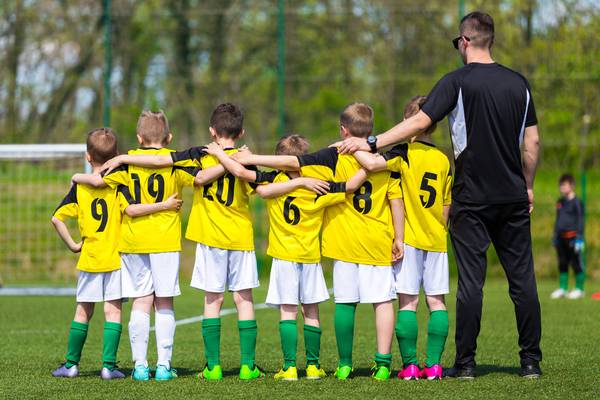
Photograph deliberately. Action rather than portraits, activity rather than individuals, a spread of children rather than the same three every week.
Edit in one batch, midweek, rather than in a rush on Sunday afternoon. Higgsfield applies the same treatment across a set in one pass.
Save the treatment. Higgsfield stores the settings that worked, so week fifteen takes minutes rather than starting over and so the next volunteer inherits something rather than nothing.
Keep originals separate from the Higgsfield exports and from anything published.
And write down the process. Two lines: who has consent, who edits, where files live, who holds the account. Committees turn over every season and this knowledge leaves with them otherwise.
Conclusion
Check the consent list is current, and make sure the person with the phone has seen it. That single step prevents more problems than every editing technique in this article combined.
Then photograph the activity rather than individuals, take more than you need, and edit midweek in one sitting. An AI Image Editor will recover the exposure, settle the colour and rescue the crops, and Higgsfield or a comparable tool turns that into twenty minutes rather than an evening.
What it will not do is give you permission. That comes from parents, in writing, at the start of the season, and it is the part worth getting right first.
Everything else is just making a grey morning look like the good day it actually was.