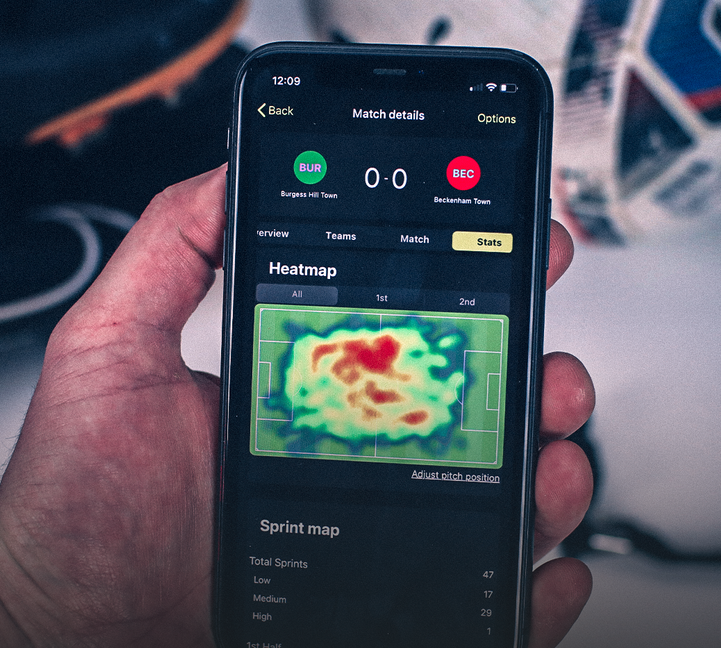
Not long ago, a football fan's knowledge of a match came from three places: the final score, the newspaper report the next morning, and whatever the pundits said on the highlights show. Today, a supporter with a smartphone can see a team's expected goals, a midfielder's progressive passes and a goalkeeper's save percentage before the referee has blown for half-time.
Data has moved out of the analysts' office and into the stands. And it is changing how people watch, discuss and understand football at every level, from the Premier League down to Sunday league.
From Gut Feeling to Expected Goals
The best-known example of this shift is expected goals, or xG. Instead of just counting shots, xG gives every chance a value based on how often similar chances have been scored in the past. A tap-in from six yards might be worth 0.7 xG. A speculative effort from 30 yards might be worth 0.03.
For fans, this has been a revelation. A team that loses 1–0 but creates 2.5 xG to their opponent's 0.4 was probably unlucky, not poor. A striker on a cold streak who keeps getting into great positions is likely to start scoring again. Conversations in the pub have become sharper because people now have a shared language to back up what they saw with their own eyes.
xG is not perfect. It doesn't capture the quality of a finish or the pressure a defender puts on a shooter. But as a starting point, it gives fans a far clearer picture of a performance than the scoreline alone.
Tracking the Players You Never Noticed
Some of football's most valuable players rarely appear on the scoresheet. The holding midfielder who breaks up play, the full-back who makes overlapping runs to open up space, the centre-back who carries the ball forward under pressure: their contributions used to be visible only to coaches and the most attentive supporters.
Modern data changes that. Metrics such as ball recoveries, pressures, progressive carries and passes into the final third show who is really doing the work. Fans who follow these numbers often find new respect for players they once overlooked, and they start to see the tactical patterns behind a team's success.
The Grassroots Effect
This is not just a top-level story. Amateur and youth clubs now have access to tools that were unimaginable a decade ago. Team management apps let coaches record goals, assists, minutes played and availability for every player across a season. Affordable GPS vests and video platforms help coaches review sessions and give young players clear, honest feedback.
For grassroots teams, good data helps in very practical ways:
-
Fair playing time. Coaches can see at a glance who has played fewer minutes and balance it out.
-
Player development. Tracking progress over a season helps young players see how they're improving.
-
Better communication. Parents and players stay informed about fixtures, results and individual contributions.
-
Smarter decisions. Patterns in results, such as conceding late in games, become easier to spot and fix in training.
The habits formed here, like paying attention to detail and backing opinions with evidence, carry over into how these players and parents watch the professional game too.
Fans, Predictions and the Numbers Behind Them
As fans become more comfortable with statistics, many enjoy testing their knowledge by predicting outcomes. Some take part in free prediction leagues with friends. Others like to compare their own reading of a match with how bookmakers price it. Form, head-to-head records, home and away splits and injury news all feed into those predictions, the same information a data-literate fan already follows.
For adults who enjoy that side of the game, platforms such as 1Red Sports offer a wide range of football betting markets, from major European leagues to international tournaments, including live in-play options that react to what's happening on the pitch. If you do choose to bet, treat it as entertainment rather than a way to make money. Set a budget before you start, never chase losses, and make sure online betting is legal where you live. Data can improve your understanding of the game, but football will always be unpredictable, and that's a big part of why we love it.
What Data Can't Tell You
For all its value, data has limits. Numbers can't fully measure leadership in the dressing room, the confidence a goalkeeper gives his back line, or the way a crowd lifts a team in the final ten minutes. A player's statistics can look ordinary while he is doing exactly what his manager asked of him.
The smartest fans use data as a lens, not a verdict. They combine what the stats say with what they see, and they stay curious when the two don't match. Often the most interesting football conversations start exactly there.
Bottom Line
Football data has made the game richer for anyone willing to look a little deeper. Expected goals, player tracking and simple team statistics give fans, coaches and players a clearer picture of what really happens on the pitch. At grassroots level, the same tools help clubs develop players fairly and run their teams more smoothly.
The scoreline will always matter most. But behind every result is a story told in numbers, and more fans than ever can now read it.