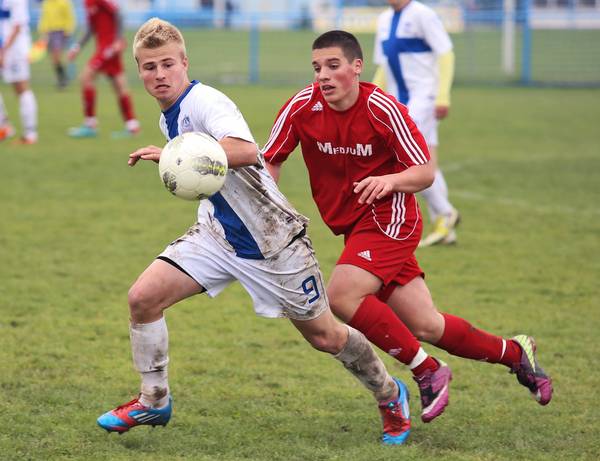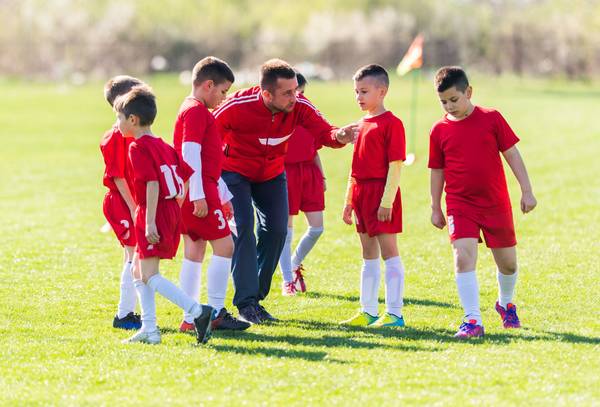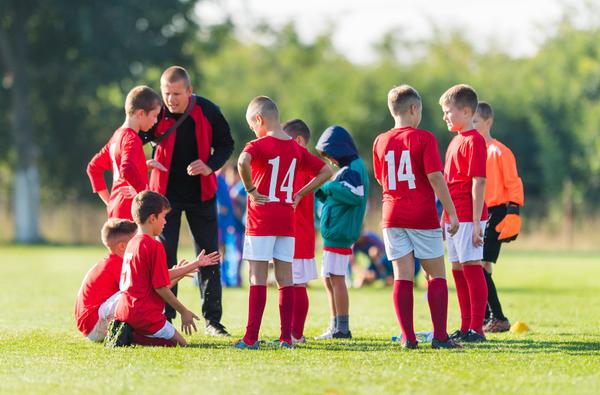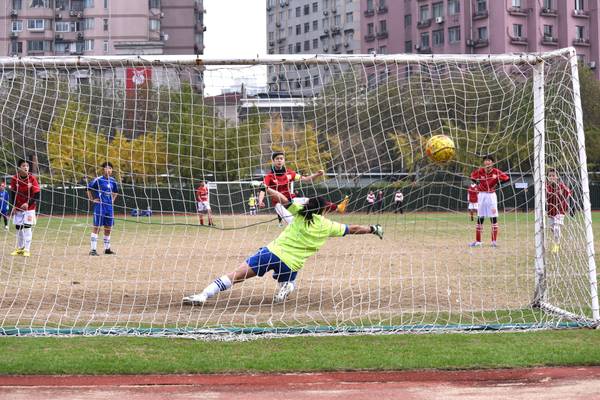

Youth football thrives on progress. When a seven-year-old learns to trap the ball cleanly, or a 14-year-old masters the timing of a defensive tackle, these moments define why grassroots football coaches dedicate countless hours to the game. Yet too often, football player goals remain vague aspirations rather than structured targets that drive genuine improvement.
The difference between "get better at passing" and "complete 15 consecutive 10-yard passes with your weaker foot" transforms how young players approach training. Clear development targets give players ownership of their progress, help parents understand what their child is working towards, and provide coaches with measurable frameworks for guidance. When every player knows exactly what they're aiming for, training sessions shift from chaotic kickabouts to purposeful development opportunities.
Setting individual football player goals requires more than tactical knowledge. It demands understanding each player's current ability, recognising realistic progression timelines, and communicating targets in ways that motivate rather than overwhelm. For volunteer coaches managing 15 players with varying abilities, this process can feel impossible without the right systems in place.
Why Individual Development Targets Matter
Generic team objectives like "improve our defence" or "score more goals" lack the specificity needed to change behaviour. A centre-back might interpret defensive improvement as winning more headers, whilst a full-back focuses on tracking runners. Without individual clarity, players default to their strengths rather than addressing weaknesses.
Individual targets create accountability. When a midfielder knows they're working on "receiving the ball on the back foot to face forward" rather than just "better ball control," they can self-assess during matches. Parents watching from the touchline can recognise progress beyond goals and assists. Coaches can provide specific feedback that references agreed objectives.
The FA's grassroots football framework emphasises long-term player development over short-term results. Individual targets align perfectly with this philosophy, shifting focus from winning at under-10 level to building technically complete players by under-16. Teams using a team management app can track these development objectives alongside match statistics, creating comprehensive player profiles that follow children through their football journey.
Research from youth development programmes shows players with documented personal targets improve faster than those without. The act of writing down a goal, reviewing it weekly, and receiving targeted coaching creates a feedback loop that accelerates skill acquisition. This approach works across all ability levels, from beginners learning basic ball mastery to advanced players refining positional understanding.
Assessing Current Ability Honestly
Effective football player goals start with accurate assessment. Overestimating ability leads to frustration; underestimating creates boredom. Coaches must evaluate technical skills, physical attributes, tactical understanding, and psychological readiness separately.
Technical assessment examines first touch, passing accuracy with both feet, dribbling under pressure, shooting technique, and defensive fundamentals. A simple rating system helps: developing (learning the basics), competent (can execute in training), proficient (reliable in matches), or advanced (can perform under pressure and teach others). Most grassroots football players sit between developing and competent, which is exactly appropriate for their age.
Physical attributes include speed, agility, strength, stamina, and coordination. These develop at different rates, particularly during growth spurts. An under-13 player who suddenly grows six inches may temporarily lose coordination, requiring adjusted targets that account for this natural awkwardness. Age-appropriate expectations matter - under-9s shouldn't be assessed on stamina like under-15s.
Tactical understanding separates players who react instinctively from those who read the game. Can they identify when to press versus drop off? Do they understand positional responsibilities in different football formations? Assessment here requires watching players make decisions during matches, not just executing drills.
Psychological readiness includes confidence, coachability, resilience after mistakes, and leadership qualities. A technically gifted player lacking confidence needs different targets than an average player with exceptional determination. Some children respond to challenging targets that stretch them; others need achievable goals that build self-belief gradually.
Creating SMART Development Targets
The SMART framework (Specific, Measurable, Achievable, Relevant, Time-bound) prevents woolly objectives that mean nothing in practice. "Improve shooting" becomes "score three goals from outside the penalty area in the next six matches" or "hit the target with your left foot eight times out of ten in shooting drills."
Specific targets name exact skills or behaviours. Instead of "better defending," specify "make five successful tackles per match without committing fouls" or "win 60% of aerial duels against similar-sized opponents." Specificity removes ambiguity about what success looks like.
Measurable targets allow objective assessment. "Pass more accurately" becomes "complete 80% of passes in the defensive third and 65% in the attacking third." Using football coaching apps makes tracking these statistics manageable rather than overwhelming. When players see their completion percentage rising from 55% to 70% over eight weeks, progress becomes tangible.
Achievable targets stretch players without breaking them. A defender who currently wins 30% of headers shouldn't target 80% in one month. A realistic progression might be 40% by mid-season, 50% by season end. Achievement builds confidence; repeated failure destroys it. Balance ambition with realism.
Relevant targets align with the player's position and the team's needs. A number six position midfielder needs different objectives than a winger. Don't set targets for skills the player will rarely use. A goalkeeper doesn't need targets for beating defenders with skill moves; a striker doesn't need targets for distribution from the back.
Time-bound targets create urgency and enable review. "By Christmas," "before the spring tournament," or "within eight weeks" provide deadlines that structure effort. Breaking season-long targets into monthly or six-week blocks maintains motivation and allows course correction if targets prove too easy or difficult.
Balancing Technical, Tactical, Physical and Mental Goals
Comprehensive development addresses all four pillars simultaneously. A player working only on technical skills without tactical understanding becomes predictable. Someone physically dominant but technically limited hits a ceiling as opponents improve.
Technical targets might include: master the Cruyff turn, consistently deliver accurate crosses from the byline, improve weak-foot passing to 70% accuracy, develop a reliable penalty technique, or learn to receive passes under pressure without losing possession. Technical work forms the foundation, particularly at younger ages when skill acquisition happens fastest.
Tactical targets could involve: recognise when to press versus hold position, understand defensive responsibilities in a 4-3-3 versus 4-4-2, improve decision-making in the final third, learn to exploit space between opposition lines, or develop better communication with teammates during defensive transitions. These targets grow more sophisticated as players mature.
Physical targets might focus on: increase sprint speed over 20 metres, improve agility through cone drills, build stamina to maintain performance in the final 15 minutes, develop core strength for shielding the ball, or enhance flexibility to reduce injury risk. Physical development must respect natural maturation rates - forcing physical targets on pre-pubescent players risks injury and burnout.
Mental targets address: maintain concentration for full matches, recover quickly from mistakes, demonstrate leadership by encouraging teammates, show resilience when the team is losing, or develop pre-match routines that optimise performance. Mental skills often separate good players from excellent ones at higher levels.
For under-12s and younger, emphasise technical and mental targets. Tactical understanding remains basic at this age, and physical development varies wildly. As players reach under-14 and beyond, tactical and physical targets gain importance whilst maintaining technical refinement.
Communicating Targets Effectively
Setting targets means nothing if players don't understand or remember them. Communication must suit the player's age and learning style. Under-9s need simple, visual targets demonstrated repeatedly. Under-15s can handle written objectives with detailed explanations.
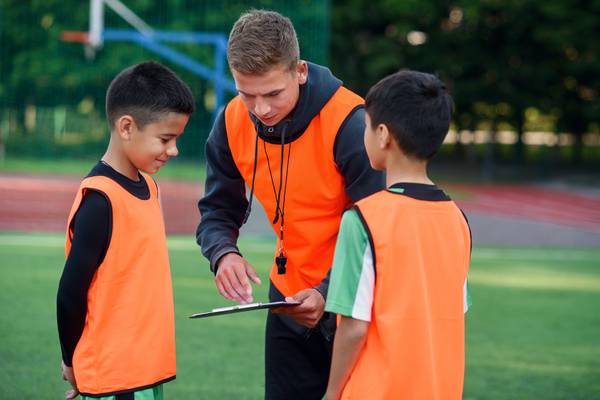
One-to-one conversations work best for initial target-setting. Pull players aside after training, explain what you've observed, and collaboratively set two or three objectives for the next period. Involving players in the process increases buy-in. Ask "What do you think you need to work on?" before suggesting your observations.
Written summaries help players and parents remember targets. A simple document listing three development objectives, why they matter, and how progress will be measured takes five minutes to create but provides lasting clarity. Share these through your team management app so they're accessible whenever needed.
Visual demonstrations beat verbal explanations for technical targets. Show the player video of the skill executed correctly, demonstrate it yourself, or use examples from professional matches. Many young players are visual learners who struggle with abstract descriptions but grasp concepts immediately when shown.
Regular check-ins maintain focus. Monthly five-minute conversations reviewing progress, celebrating improvements, and adjusting targets keep development front-of-mind. Without these touchpoints, players forget their objectives and revert to playing instinctively rather than purposefully.
Parent communication prevents misunderstandings. When parents understand their child's targets, they can reinforce them during car rides home and garden kickabouts. They're also less likely to criticise the child for not scoring if the current focus is defensive positioning. Brief parents on development priorities at the season's start and update them quarterly.
Tracking Progress Without Overwhelming Yourself
Monitoring 15 individual development plans sounds impossible for volunteer coaches already stretched thin. The key is simple systems that capture essential information without requiring hours of administration.
Post-match observations take three minutes per player. Immediately after the final whistle, note one thing each player did well and one area for improvement related to their targets. These brief notes prevent memory blur and provide concrete feedback for the next training session. Digital tools make this process faster than paper notebooks.
Video analysis accelerates assessment. Recording matches and reviewing key moments shows players exactly what you mean. A 20-second clip of a midfielder receiving on their back foot perfectly illustrates the target better than ten minutes of explanation. Many smartphones now offer simple editing tools that make creating these clips straightforward.
Player self-assessment develops ownership. Ask players to rate their own progress against targets each month. This metacognitive practice helps them become independent learners who don't rely entirely on coach feedback. Comparing their self-assessment with your observations also reveals confidence issues or blind spots.
Peer feedback introduces new perspectives. Pair players up to observe each other's progress on specific targets during small-sided games. An under-14 learning to time tackles benefits from a teammate counting successful versus unsuccessful challenges. This approach reduces your workload whilst building team cohesion.
Statistical tracking works for measurable targets. Pass completion rates, shots on target, successful dribbles, tackles won, and aerial duels can all be tracked using football coaching apps designed for grassroots football teams. Numbers don't tell the whole story, but they provide objective data points that complement qualitative observations.
Adjusting Targets as Players Develop
Development isn't linear. Growth spurts, confidence fluctuations, family circumstances, and natural plateaus all affect progress. Rigid targets that ignore these realities frustrate rather than motivate.
Quarterly reviews allow necessary adjustments. A target that seemed realistic in September might prove too easy or difficult by November. Regular reviews catch this early, preventing wasted effort on inappropriate objectives. These reviews also celebrate progress, which maintains motivation through challenging periods.
Accelerated progress demands harder targets. When a player masters their objectives ahead of schedule, raise the bar immediately. Boredom kills development as surely as frustration. A striker who achieves their "score six goals this season" target by October needs a new challenge, perhaps "score with your weaker foot three times" or "create five assists for teammates."
Slower progress requires analysis, not just easier targets. Why hasn't the player improved as expected? Are they practising outside training? Do they understand the target? Is the target actually inappropriate for their current ability? Sometimes the solution is better coaching, not lower expectations.
Life circumstances affect football development. A player struggling with schoolwork, dealing with family issues, or recovering from injury needs adjusted targets that reduce pressure rather than add to it. Football should be a positive outlet during difficult periods, not another source of stress.
Position changes require new target sets. A midfielder moving to defence needs different objectives than they had in midfield. Don't force players to continue working on irrelevant targets just because you set them earlier. Flexibility demonstrates that targets serve the player's development, not bureaucratic consistency.
Linking Individual Targets to Team Objectives
Individual development and team success aren't competing priorities. Clear personal targets that align with team needs create cohesive improvement.
Team tactical systems inform individual targets. A team playing out from the back needs defenders comfortable receiving under pressure and centre-backs who can split opposition forwards with passes. Individual targets for defenders should reflect these team requirements. Similarly, teams pressing high need forwards who understand when and how to trigger pressure.
Positional targets support team shape. If the team struggles with defensive width, full-backs need individual targets around maintaining position and tracking wide runners. If the team lacks creativity, attacking midfielders need targets focused on key passes and final-third decision-making. Individual improvement in these areas directly enhances team performance.
Collective targets unite the squad. Whilst each player has personal objectives, some team-wide targets create shared purpose. "Reduce goals conceded from set pieces by 50%" becomes everyone's responsibility, with defenders, midfielders, and attackers all contributing through their individual roles.
Competition for places motivates when handled sensitively. Two strikers competing for one position both working on finishing creates healthy challenge. Two centre-backs both targeting improved aerial dominance pushes both to excel. This works only when coaches emphasise personal improvement over comparisons with teammates.
Age-Appropriate Development Targets
What constitutes realistic football player goals varies dramatically by age. Under-7s need fundamentally different targets than under-16s.
Under-7 to Under-9: Focus on basic ball mastery, coordination, and enjoyment. Targets might include: dribble 10 metres without losing control, make five successful passes to teammates per game, or try a new skill move in matches. At this age, targets should build confidence and love of the game rather than tactical sophistication.
Under-10 to Under-12: Introduce positional understanding and both-foot development. Targets could involve: use your weaker foot for 30% of passes, understand your role when the team has/doesn't have the ball, or successfully complete specific techniques like throw-ins or corners. Technical fundamentals remain paramount, but tactical awareness begins developing.
Under-13 to Under-15: Emphasise tactical intelligence, decision-making, and physical development. Targets might address: recognise when to play forward versus retain possession, improve one-versus-one defending success rate to 60%, or develop a pre-match preparation routine. Players at this age can handle sophisticated concepts and benefit from detailed analysis.
Under-16 and above: Focus on consistency, mental resilience, and specialist skills. Targets could include: maintain performance levels across full 90 minutes, develop leadership qualities by organising teammates, or master advanced positional concepts. Players approaching adult football need targets that prepare them for higher competitive levels.
The best age to start football influences how quickly players progress through these stages. Late starters at under-12 need different targets than players who've trained since under-6, even if they're the same age.
Common Mistakes When Setting Player Goals
Even experienced coaches fall into predictable traps when establishing development targets.
Setting too many targets simultaneously overwhelms players. Three focused objectives beat ten scattered ones. Players can only consciously work on a few things at once. Additional targets become background noise that dilutes effort.
Making targets too similar to each other wastes opportunities. Three passing-related targets don't address the player's defensive weaknesses or physical development. Spread targets across different development pillars for balanced growth.
Copying targets across multiple players ignores individual needs. Just because five players are the same age and play similar positions doesn't mean they need identical objectives. Personalisation matters.
Focusing exclusively on weaknesses demoralises players. Balance weakness-addressing targets with strength-enhancing ones. A defender weak in the air but excellent at reading danger might have one aerial target and one target around intercepting passes before they arrive.
Setting targets without player input reduces ownership. Players who help choose their objectives invest more effort in achieving them. Collaborative target-setting beats top-down prescription.
Never celebrating progress makes targets feel like criticism. When players achieve objectives, acknowledge it publicly and set new challenges. Recognition fuels motivation.
Ignoring the player's own aspirations misses intrinsic motivation. If a midfielder desperately wants to improve their shooting but you're focused on their passing, they'll practice shooting anyway. Better to incorporate their interests into one target whilst addressing your priorities in others.
Using Technology to Support Development
Modern tools make tracking and communicating football player goals far more manageable than traditional clipboards and memory.
Digital platforms allow coaches to document targets, track progress, and share updates with players and parents from their phone. Instead of losing paper notes or forgetting who's working on what, everything stays organised and accessible. This consistency helps players understand their development journey over months and years, not just individual training sessions.
Video analysis tools help players visualise their progress. Recording a player's shooting technique in September and comparing it to December footage makes improvement tangible. Young players particularly benefit from seeing themselves execute skills correctly, which reinforces muscle memory faster than verbal coaching alone.
Statistical tracking provides objective progress measures for quantifiable targets. Pass completion rates, distance covered, successful tackles, and shots on target can all be monitored without manual counting. These numbers complement qualitative coaching observations, creating a complete development picture.
Communication features ensure targets don't get forgotten between training sessions. Sending a quick message reminding a player of their focus areas before match day keeps objectives front-of-mind. Parents can access their child's targets anytime, supporting development at home without pestering coaches for updates.
Conclusion
Setting clear development targets transforms football player goals from vague aspirations into structured pathways for improvement. When every player knows exactly what they're working towards, training sessions become purposeful, matches provide learning opportunities, and progress becomes measurable rather than subjective.
The most effective targets are specific, measurable, achievable, relevant, and time-bound. They balance technical, tactical, physical, and mental development whilst respecting age-appropriate expectations. Communication must be clear, regular, and collaborative, involving players in setting objectives they actually care about achieving.
For volunteer coaches managing multiple players with limited time, simple systems make individual target-setting manageable. Brief post-match notes, monthly check-ins, and digital tools prevent the process from becoming overwhelming. The investment pays dividends as players develop faster, parents understand what their children are learning, and teams improve through accumulated individual progress.
Development targets work only when reviewed and adjusted regularly. Quarterly assessments catch targets that need raising or lowering, celebrate achievements, and maintain motivation through the inevitable plateaus every player experiences. Flexibility demonstrates that targets serve player development, not administrative consistency.
The grassroots football community thrives when individual player development takes priority over short-term results. Clear targets aligned with long-term growth create technically complete, tactically intelligent players who love the game. TeamStats provides the organisational foundation that makes tracking individual development realistic for time-poor volunteer coaches, ensuring every player receives the personalised attention they deserve.
═══════════════════════════════════════════════════════════════