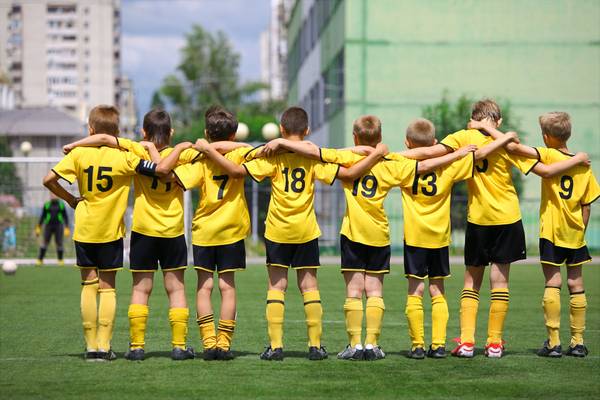
A strong team is not built by putting good players in the same room and waiting for quality to take over. That works for a week, maybe for a soft fixture, rarely for a season. Real cohesion is different. It is role clarity, trust under pressure, shared standards, honest communication and the ability to keep working when one mistake could break the evening.
The business around sport proves how valuable a united team becomes. When a side starts winning, attention spreads: broadcasters talk about it, sponsors want the story, betting platforms build markets around it, and fans spend more time reading previews, checking odds and comparing related entertainment products. In that wider sports-media route, pragmatic play fits as a page where users can review online gaming formats, provider-related titles, conditions and practical details before comparing what is available. It is part of the surrounding attention economy, not the reason a team wins. The reason is still inside the group: the players know what they owe each other.

Cohesion is not friendship, it is reliability
The best teams reduce hesitation
People often confuse togetherness with everyone being friends. That is too soft. Plenty of successful teams include difficult characters, hard conversations and internal tension. Cohesion means something more useful: players know the plan, know their job, trust the next man to do his, and do not start improvising out of panic after the first setback.
This matters most when time disappears. A defender deciding whether to step out, a midfielder choosing whether to press, a winger tracking a full-back after losing the ball. These are not motivational moments. They are habits. A cohesive side saves energy because it does not negotiate every situation from scratch.
The same idea appears outside sport. Google’s Project Aristotle became famous because it found that high-performing teams need psychological safety, meaning people can speak up, admit mistakes and challenge decisions without fear of being punished or humiliated. That does not mean softness. It means information moves quickly enough for the group to correct itself.
Pressure exposes fake unity
Every team looks together after a 4-0 win. The test comes after a red card, a missed penalty, a bad tactical call or a run of poor results. Weak groups split the blame. Strong ones shorten the distance between mistake and reaction. The captain talks, the coach adjusts, the bench stays engaged, and the team returns to the plan without needing a dramatic speech.
That is why cohesion has betting and analytical value too. A team with strong internal structure is easier to trust in awkward matches. It may not always win, but it usually keeps its shape longer. That matters when evaluating comeback potential, late goals, defensive stability and how a side reacts after conceding first.
Leicester City 2015/16: a simple plan, fully believed
Ranieri built clarity, not fantasy
Leicester City’s Premier League title in 2015/16 remains one of the cleanest examples of cohesion beating richer, deeper squads. The Premier League itself describes the triumph as one of sport’s great underdog stories. Claudio Ranieri did not turn Leicester into a possession machine. He gave the team a narrow, repeatable identity: compact defending, quick transitions, Jamie Vardy attacking space, Riyad Mahrez creating danger, N’Golo Kanté covering ground, Wes Morgan leading a back line that accepted the grind.
The key was that nobody looked embarrassed by the plan. Leicester did not try to imitate bigger clubs. They played the football that suited their squad and repeated it with discipline. That is cohesion in practical terms: not “we are united” as a slogan, but “we all accept what wins for us.”
Big clubs had better squads, Leicester had better alignment
Manchester City, Arsenal, Chelsea, Manchester United and Liverpool all had more expensive groups. Leicester had fewer distractions. The hierarchy was clean, the roles were obvious, and the emotional rhythm of the season became powerful. Once the players felt the plan working, belief stopped being abstract.
This is one of the most important lessons for coaches. Cohesion is easier when the strategy is believable. Players do not buy into vague talk. They buy into instructions that give them an edge on Saturday.
Greece at Euro 2004: discipline turned into history
Rehhagel made limits useful
Greece winning Euro 2004 was not pretty in the modern highlight-reel sense, but it was brutally effective. Otto Rehhagel’s side began the tournament as major outsiders and beat hosts Portugal 1-0 in the final through Angelos Charisteas. UEFA called it one of the biggest shocks at a major tournament.
The lazy view says Greece only defended. That misses the point. They defended as a unit, attacked set-pieces with conviction and accepted a style that gave them a realistic route against technically superior teams. Every player understood the trade-off. Less glamour, more control. Less freedom, more protection. In knockout football, that can be enough.
Cohesion can make a modest team dangerous
Greece did not have the deepest pool of stars. What they had was collective agreement. They were hard to move, hard to panic and hard to pull apart. France, the Czech Republic and Portugal all had more individual talent. Greece had the cleaner shared script.
For underdogs, that is the model. Do not pretend to have weapons you do not have. Build around what can survive pressure. A compact team with ten players committed to the same defensive action is often more dangerous than a talented side with five players freelancing.
Argentina 2022: stars accepted sacrifice
Messi mattered, but the group protected the idea
Argentina’s 2022 World Cup win is remembered through Lionel Messi, and fairly so. But the trophy was not won by Messi alone. Lionel Scaloni built a team that could change shape, suffer, protect leads, survive emotional swings and still give its best player enough support in the decisive zones. FIFA described Argentina’s victory as a triumph of perseverance, which is a better word than magic.
Argentina lost the opening match to Saudi Arabia, a result that could have cracked the group. Instead, the team tightened. Scaloni adjusted, trusted the system and leaned into players who could run, fight and connect the side. Before the semi-final against Croatia, he said Argentina would trust their system and had identified where to hurt the opponent. That is not romance. That is a team using disappointment as information.
Cohesion lets stars be stars
The biggest misconception about unity is that it reduces individuality. Good cohesion does the opposite. It creates the structure that lets special players decide. Messi could drop, combine and finish because others covered ground around him. Rodrigo De Paul, Alexis Mac Allister, Enzo Fernández, Julián Álvarez and Ángel Di María did not all play the same role, but they accepted the same mission.
That is the balance elite teams chase: freedom in the final third, discipline everywhere else.
Golden State Warriors 2015: ego control in a star league
Kerr turned talent into shared rhythm
The 2015 Golden State Warriors won the NBA title despite having no player with previous NBA Finals experience, and Steve Kerr became the first rookie coach since Pat Riley in 1982 to win the championship. Reuters framed it as a group that overcame lack of experience through a new style and collective confidence.
The Warriors had Stephen Curry and Klay Thompson, but their rise was not only shooting. Draymond Green’s defensive communication, Andre Iguodala’s willingness to accept a changing role, and the team’s constant ball movement turned individual skill into a system. Kerr later praised the sacrifice inside the group, and that word matters. Sacrifice is not losing status. It is accepting the role that makes the whole machine work.
Role acceptance beats role confusion
In star-heavy environments, the biggest danger is not lack of ability. It is role confusion. Who closes games? Who defends the best scorer? Who takes fewer shots when the matchup demands it? The Warriors answered those questions faster than most teams. That is why their cohesion translated into titles rather than just good regular-season numbers.
What leaders should actually do with this lesson
Team cohesion cannot be ordered in one meeting. It has to be built through repeated, visible habits. The coach must define roles clearly and explain why they matter. Senior players must enforce standards without creating fear. Mistakes must be reviewed quickly, not buried. The bench must know how it can influence the match, even with limited minutes.
The practical advice is simple. First, make the game model clear enough that players can repeat it under stress. Second, reward unglamorous work publicly: tracking runners, covering teammates, making the extra pass. Third, keep communication direct. Teams do not collapse because someone says something uncomfortable; they collapse when nobody says it until it is too late. Fourth, protect role dignity. A substitute who feels respected is more likely to change a match than one who feels forgotten.
The strongest teams are rarely the quietest or the nicest. They are the most aligned. Leicester trusted a simple plan. Greece made discipline their weapon. Argentina gave Messi a structure worth believing in. Golden State turned shooting talent into shared rhythm. Different sports, same lesson: talent opens the door, but cohesion decides how long a team can stay inside the room when pressure arrives.