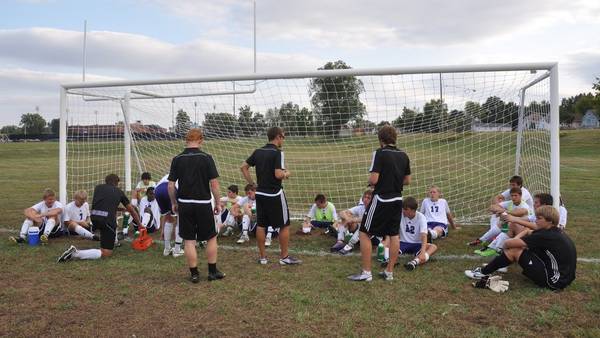

Every Monday morning at grassroots clubs across the country, coaches face the same challenge: remembering what worked last week, what needs fixing, and whether they actually followed through on that training drill they'd planned. Without a proper system, even the most passionate coach ends up winging it more than they'd like to admit.
A structured coaching workflow isn't about adding bureaucracy to weekends. It's about creating a repeatable process that ensures every player gets consistent attention, every session builds on the last, and coaches aren't frantically Googling "defending drills for U12s" ten minutes before training starts.
The difference shows up in results. Teams with consistent coaching workflows improve 30-40% faster in skill assessments compared to those operating session-to-session without structure. Players know what to expect, parents see progression, and coaches stop feeling like they're reinventing the wheel every Thursday evening.
Why Most Coaching Approaches Fail Consistency
Walk into any Sunday league changing room and the same story emerges: "We were brilliant last month, terrible this week, no idea what changed." That's not bad luck or mysterious form dips. It's the natural result of coaching without documented processes.
Three problems kill consistency before it starts. First, memory isn't reliable - coaches forget which players struggled with first-touch work or who missed the passing session. Second, external pressures derail plans - a rainy pitch forces abandoning carefully planned positional work. Third, different coaches (if sharing duties) bring different approaches, confusing players about fundamentals.
The solution isn't working harder. It's building a football coaching workflow that captures what works, adapts to conditions, and keeps everyone aligned on core principles regardless of who's leading the warm-up.
Building Your Core Coaching Cycle
A proper workflow operates on three timeframes: season-level planning, weekly preparation, and session-day execution. Each feeds into the next, creating a system that runs itself once established.
Season-Level Planning
Season-level planning starts before the first training session. Map out technical focus areas across the campaign - perhaps September focuses on ball control, October on passing combinations, November on defensive shape. This doesn't mean ignoring other skills; it means dedicating 60% of training time to the monthly priority while maintaining the rest.
Break each monthly focus into weekly objectives. If October's theme is passing, week one might emphasise two-touch combinations, week two works on switching play, week three introduces through balls, week four reviews and tests everything. Players progress through logical steps rather than random drills.
Weekly Preparation
Weekly preparation translates objectives into actual sessions. Every Sunday evening (or whenever suits the schedule), spend 20 minutes planning the week ahead. Review last week's notes - what worked brilliantly, what fell flat, which players need extra attention. Check the monthly focus and select 2-3 drills that advance that skill.
Document plans somewhere accessible. A team management app keeps everything in one place - session plans, player notes, attendance records, and performance tracking all linked together. No more scraps of paper or forgotten WhatsApp messages.
Session-Day Execution
Session-day execution follows plans but remains flexible. Arrive 15 minutes early with documented session structure. If weather or player numbers force changes, adapt a solid plan rather than improvising from scratch. That's the crucial difference - structured flexibility versus chaos.
The Five Elements Every Session Needs
Consistency comes from repeating patterns, not repeating identical sessions. Football coaching workflows should ensure every training includes these five components, regardless of specific drills or focus areas.
Physical Warm-Up (10 Minutes)
Physical warm-up prepares bodies and switches brains into football mode. Keep it simple - dynamic stretches, light jogging, basic ball work. The same routine each week becomes automatic, letting players focus on what comes next rather than figuring out instructions.
Technical Focus (25-30 Minutes)
Technical focus delivers weekly objectives through progressive drills. Start simple, add complexity, finish with game-realistic scenarios. If working on passing, begin with stationary pairs, progress to moving triangles, end with possession games under pressure. Players experience success before facing challenges.
Tactical Application (15-20 Minutes)
Tactical application shows how today's technical work fits into match situations. This bridges the gap between isolated drills and actual football. Passing work translates into building from the back; defending drills become organized pressing; dribbling becomes attacking transitions.
Understanding football formations helps coaches design tactical applications that mirror real match scenarios.
Small-Sided Game (15-20 Minutes)
Small-sided games let players apply everything in realistic conditions. Keep teams small (4v4 or 5v5) so everyone touches the ball frequently. Resist the urge to stop play constantly - let them figure things out, intervening only for major corrections or safety.
Cool-Down and Review (5-10 Minutes)
Cool-down and review brings physical intensity down whilst reinforcing learning. Ask players what they noticed, what worked, what they'll try in Saturday's match. This reflection embeds lessons far better than just dismissing everyone when time's up.
Tracking What Actually Matters
Documentation sounds tedious until coaches realize it's the only way to spot patterns. Coaching workflows need simple tracking systems that capture useful information without becoming a second job.
After each session, record three things: attendance (who trained, who missed), performance notes (which players excelled, who struggled, any standout moments), and plan effectiveness (did the session achieve its objective, would it run again, what needs adjusting).
This takes five minutes with the right tools. Modern platforms let coaches tick attendance on phones, add quick notes per player, and rate session quality with a few taps. Compare that to remembering everything until getting home, then trying to recall who was actually there.
The real value appears weeks later. When selecting starting elevens, coaches have documented evidence of who's consistently shown up and performed. When parents ask about their child's development, coaches reference specific sessions and improvements rather than vague reassurances.
Player progression tracking deserves special attention. Rate each player monthly on core competencies relevant to their position - first touch, passing accuracy, defensive positioning, whatever matters for their role. Use a simple 1-5 scale. Over a season, clear development curves emerge or identify players who've plateaued and need different approaches.
Adapting Your Workflow to Different Age Groups
Under-8s need different structures than under-16s, but both benefit from consistency. Workflow frameworks stay the same; the content and complexity change.
Younger Age Groups (U7-U10)
Younger age groups require shorter activity blocks and more variety. Sessions might include six different activities lasting 8-10 minutes each rather than three longer blocks. The five-element structure still applies - it's just broken into smaller pieces. Warm-up becomes a fun game, technical work uses simple 1v1 or 2v2 scenarios, tactical application barely exists (they're not ready), small-sided games dominate, cool-down involves gentle activity.
Tracking focuses on engagement and basic skill development. Did they enjoy the session? Can they now pass with their laces rather than their toes? Are they starting to understand not bunching around the ball? Document these fundamentals rather than complex tactical awareness.
Older Age Groups (U14+)
Older age groups handle longer, more complex activities. They can sustain 25-minute drills that younger players would find boring. Tactical application becomes sophisticated - discussing 9-a-side tactics, explaining the number six position, analyzing opponent tendencies.
Tracking shifts toward performance metrics. Sprint times, passing accuracy percentages, successful tackles, goals scored in training games - older players respond to measurable improvement. They also benefit from seeing their development documented, understanding they're progressing even when match results don't reflect it.
Creating Pre-Match and Post-Match Routines
Training consistency means nothing if match days descend into chaos. Workflows need to extend through the entire week, including game preparation and review.
Pre-Match Routine (48 Hours Before Kick-Off)
Pre-match routine starts with team selection based on documented training observations. No surprises or favouritism - players who've trained well and shown form get picked. Communicate the squad early enough that everyone can arrange to attend.
Send a match-day brief covering kickoff time, arrival time, what to bring, expected weather, and any tactical focus. Repeat the same information structure every week so players and parents know exactly what to expect. Include one or two reminders of current technical focus - if three weeks have been spent on defensive shape, mention watching for compact lines and communication.
The day before, review opponents if possible. Coaches aren't scouting Premier League teams, but if they've played them before or can watch their previous match, note their strengths and likely approach. Share one or two key points with the team - "They're quick on the counter, so we need to be careful not to over-commit" or "Their keeper struggles with crosses, so get wide when possible."
Post-Match Routine
Post-match routine happens immediately after the final whistle. Gather the team for a two-minute reflection whilst everything's fresh. Highlight two things they did well and one area for improvement. Keep it brief - detailed analysis comes later when emotions have settled.
Within 24 hours, document match performance. Record the result, goalscorers, standout performers, tactical observations, and individual player notes. This feeds directly into the next training plan. If defensive shape collapsed in the second half, that becomes next week's tactical focus. If the striker scored twice using skills from training, that reinforces what's working.
Share appropriate match notes with players and parents. They don't need tactical analysis, but they appreciate knowing who played well and what the team will work on next. This transparency builds trust and shows players are being developed systematically rather than randomly.
Handling the Inevitable Disruptions
Perfect consistency doesn't exist. Weather cancels sessions, players get injured, life interferes with best-laid plans. Workflows need built-in flexibility that maintains direction whilst accommodating reality.
When sessions get cancelled, don't just skip the week's objective. Send players a simple home practice routine covering the same skills - ten minutes of wall passes if working on passing, basic dribbling patterns if that was the focus. Include a short video demonstration if possible. Some will do it, most won't, but the thread is maintained.
Injured players need modified involvement to stay connected and learning. They can't participate physically, but they can observe and analyze. Ask them to watch training and note three things the team does well and one area for improvement. This develops tactical understanding whilst keeping them engaged. Document their observations - they often spot patterns that get missed whilst running the session.
Player availability fluctuations force adaptation but shouldn't derail plans. If half the squad misses training, run the same session with modifications for smaller numbers. Passing drills designed for 16 players work with 10 if spacing and intensity are adjusted. The core objective remains unchanged.
Season disruptions - international breaks, exam periods, holiday periods - need acknowledging in annual plans. Schedule lighter technical work during busy periods rather than introducing complex new concepts. Use these weeks for review and consolidation, letting players master existing skills rather than piling on new information.
Measuring Workflow Effectiveness
Coaching workflows exist to improve player development and team performance. If they're not delivering those outcomes, they need adjusting. Build regular review points into systems.
Monthly reviews assess whether current focuses are working. Are players demonstrably better at the skills emphasized? Can improvement be seen in matches, not just training? If four weeks have been spent on passing but the team still hoofs the ball long under pressure, something's not working.
Compare documented session notes with match performance. If training looks brilliant but matches remain chaotic, practice isn't translating into game situations effectively. Increase the complexity and pressure in training scenarios, or spend more time on tactical application showing players when to use specific skills.
Quarterly reviews examine bigger patterns. Which players have improved most? Which have stagnated? Are certain session types consistently effective whilst others fall flat? This data guides planning for the next quarter.
Look beyond your own team occasionally. How are other teams in the league developing? If consistently behind, workflows might need fundamental changes rather than minor tweaks. If ahead, document what's working to maintain it.
End-of-season review evaluates everything. Player development, team results, parent satisfaction, personal enjoyment and sustainability. A workflow that burns coaches out isn't sustainable regardless of results. One that maintains enthusiasm whilst developing players is worth keeping even if results were mixed.
Ask players and parents for feedback. What did they enjoy? What would they change? Useful insights will emerge alongside unrealistic demands for more playing time. Filter feedback through documented observations - if a parent claims their child never gets opportunities but notes show consistent selection and playing time, evidence supports decisions.
Integrating Technology Without Overcomplicating
Modern tools make workflow management simpler, but only if used properly. Technology should reduce admin burden, not create new tasks.
A proper platform consolidates everything - session planning, attendance tracking, match reports, player development notes, parent communication, and schedule management. Coaches update one system rather than juggling spreadsheets, WhatsApp groups, email chains, and paper notes.
The key is choosing tools designed for football coaching rather than generic project management apps. Football-specific platforms understand workflows naturally. They know coaches need to track attendance, record match events, plan sessions around weather and pitch availability, and communicate with parents who want updates but not overwhelming detail.
Look for systems that work offline. Signal won't always be available at training grounds, but attendance and notes need recording regardless. Apps should sync automatically when connection returns, not lose data or create conflicts.
Integration with league systems saves massive time. If the league directory connects directly with team management systems, fixtures update automatically, results post without manual entry, and separate calendars don't need maintaining. This matters more as coaches get busier - what's manageable with one team becomes impossible with three.
Building Buy-In from Players and Parents
The best workflows fail if players don't engage and parents don't support them. Everyone needs to understand why consistency matters and how systems deliver it.
Start by explaining the annual plan at the season kickoff meeting. Show parents the progression mapped out - how September's work on ball control feeds into October's passing combinations, which enable November's tactical patterns. They'll see something systematic is being built rather than random training sessions being run.
Share workflow basics without overwhelming detail. Parents don't need to know exact drill selections, but they should understand that sessions are planned weekly, player development is documented, and team selection is based on consistent training performance. This transparency prevents the "my child never gets picked" complaints based on selective memory.
Players buy in when they see personal improvement. Reference documented notes in conversations - "Three months ago you struggled with your weaker foot; look at how confidently you're using it now." Concrete evidence of development motivates continued effort far better than vague encouragement.
Create visible progress markers. If specific skills are being tracked monthly, share aggregated team improvements. "As a team, our passing accuracy in training games has gone from 60% to 78% this term." Players see that consistent work produces measurable results.
Celebrate players who embody workflow values - consistent attendance, effort in training, applying coached skills in matches. This reinforces that systems reward the behaviours being encouraged. It also shows struggling players exactly what they need to do to improve their standing.
Sustaining Your Workflow Long-Term
Initial enthusiasm fades. Six weeks into the season, documenting every session feels tedious. Three months in, coaches are tempted to skip weekly planning because they're busy. This is where most coaching workflows die.
Sustainability comes from making workflows genuinely easier than operating without one. If systems create more work than they save, they won't be maintained. The solution is ruthless simplification - keep only the elements that deliver clear value.
Absolute minimum viable workflows contain three components: session plans (so coaches aren't improvising), attendance records (so they know who's actually training), and monthly player reviews (so they can track development). Everything else is optional enhancement.
Build habits by starting small. Commit to just planning next week's sessions every Sunday evening. Do that consistently for a month before adding player development tracking. Add match analysis only when session planning feels automatic. Gradual implementation beats ambitious starts that collapse within weeks.
Find accountability partners - other coaches who are also building systematic approaches. Share weekly plans, compare notes on what's working, remind each other to document sessions. External accountability maintains consistency when motivation flags.
Schedule workflow tasks like training sessions. "Sunday 8 PM: plan next week" goes in calendars as a recurring appointment. "Monthly player reviews: first Sunday of each month" becomes automatic. Treat these commitments like actual coaching sessions - they're not optional extras to do "if there's time."
Review and refine quarterly. Workflows should evolve as coaches learn what works for specific situations. The system started with won't be the system used a year later, and that's fine. Continuous improvement beats rigid adherence to an imperfect process.
Common Workflow Mistakes to Avoid
Even well-intentioned systems fail when coaches make predictable errors. Recognizing these patterns helps avoid them.
Over-documentation kills workflows faster than under-documentation. Essay-length session reports or detailed tactical analyses of training games aren't needed. Brief notes capturing key points work better than comprehensive reports that won't be maintained after two weeks. Three bullet points per session beats a paragraph that gets abandoned.
Rigid planning that ignores reality creates frustration. Workflows should guide decisions, not dictate them. If plans say "passing drills" but players are clearly exhausted and need something lighter, adapt. Document why plans changed and what was done instead - that's useful learning for future situations.
Inconsistent application undermines the entire point. Running workflows brilliantly for three weeks, then skipping for two, then restarting creates confusion rather than consistency. Players need reliable patterns. If implementing a system, commit to maintaining it or don't start.
Complexity creep gradually transforms simple workflows into administrative nightmares. Start tracking three metrics, then add two more, then three more, until more time is spent on data entry than coaching. Regularly audit workflows and eliminate anything that's not delivering clear value.
Ignoring feedback loops means never improving. Workflows should inform themselves - session notes influence next week's plans, match observations guide training focus, player development data shapes individual coaching. If documenting information but never referencing it, time is being wasted.
Adapting Workflows for Multi-Team Coaching
Managing multiple teams multiplies complexity. Workflows need scaling without becoming unsustainable.
The foundation is consistent structure across all teams. Every team follows the same five-element session format, uses the same documentation approach, and operates on the same weekly planning cycle. This lets coaches batch similar tasks - plan all teams' sessions in one sitting, review all match reports together, update all player notes during one admin block.
Differentiate content whilst maintaining structure. U10s and U16s run the same workflow framework but with age-appropriate activities and complexity. Processes aren't being reinvented for each team; the same system is being applied with different parameters.
Delegate where possible without losing oversight. If assistant coaches are available, they can run sessions following planned structures whilst the head coach supervises and documents. Workflows should be clear enough that someone else can execute session plans effectively. This requires better documentation than when coaching solo, but it's essential for scaling.
Use technology to manage multiple teams efficiently. Good systems let coaches switch between teams instantly, copy session plans from one team to another (then modify for age group), and see all upcoming commitments in one calendar. Separate systems don't need maintaining for each team.
Conclusion
Creating a coaching workflow that improves consistency isn't about adding bureaucracy - it's about building systems that make good coaching sustainable. When every session builds on the previous one, when player development gets documented systematically, when match-day preparation follows reliable patterns, the quality of coaching improves dramatically.
The benefits extend beyond the pitch. Coaches who operate systematically experience less stress, more satisfaction, and greater longevity in volunteer roles. Players develop faster and more comprehensively. Parents see professionalism and structure that builds confidence in the club.
Most importantly, consistent workflows transform coaching from a series of isolated sessions into a genuine development programme. Players aren't just turning up for training - they're progressing through a structured pathway that takes them from basic skills to sophisticated tactical understanding.
The investment in building these systems pays dividends every single week. What initially feels like extra work becomes the foundation for better coaching, faster player development, and more sustainable volunteer commitments. Ready to build coaching consistency into your team's DNA? TeamStats provides the platform to document, track, and execute the football coaching workflow that transforms good intentions into measurable player development.
═══════════════════════════════════════════════════════════════