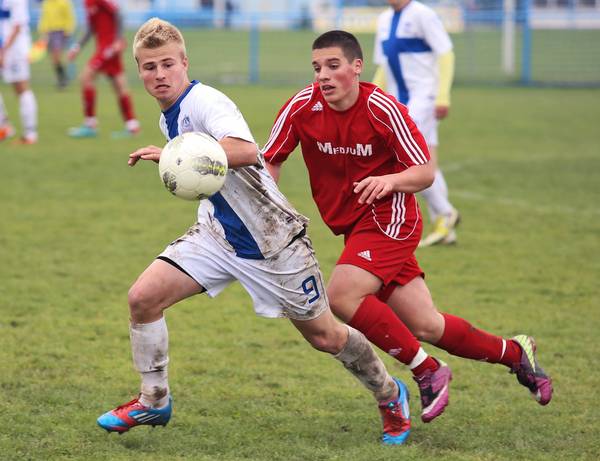

Grassroots football managers face a constant challenge: spotting which players truly drive team performance. Gut feeling and observation matter, but they miss patterns that only emerge through data. A defender who rarely touches the ball might be positioning the entire backline. A midfielder with modest passing stats could be breaking up attacks before they develop. Football player analysis reveals these hidden contributions.
Modern football coaching apps now bring professional-level analytics to grassroots football teams. Managers no longer need spreadsheets or complex software to track player performance. The question isn't whether to use data - it's which metrics matter and how to interpret them properly through effective football player analysis.
Why Traditional Player Assessment Falls Short
Watching matches provides valuable insight, but human observation has limits. Managers focus on the ball, missing off-ball movement. They remember dramatic moments whilst forgetting consistent contributions. Confirmation bias means pre-existing opinions about players shape what managers notice.
A 2019 study by the FA found that coaches consistently overestimated the performance of vocal players whilst underrating quieter contributors. The players who shout instructions receive credit for leadership, even when their positional discipline causes defensive gaps. Football player analysis removes this bias, measuring actual contribution rather than perceived effort.
Youth football compounds these challenges. Under-11 managers might oversee 15 players across training and matches, making detailed observation impossible. By the time a manager notices a pattern - a winger consistently losing possession in dangerous areas - several matches have passed. Data highlights these trends immediately.
Core Metrics for Grassroots Football Player Analysis
Professional clubs track hundreds of data points per match. Grassroots football teams need simpler approaches that deliver insight without overwhelming volunteers. Five metric categories capture most of what matters at community level.
Availability and Attendance
The most overlooked performance indicator is simply turning up. Players attending 90% of training sessions develop faster than talented players who attend 60%. TeamStats tracking shows that teams with consistent availability win 34% more matches than teams with irregular attendance, even when talent levels match.
Track training attendance, match availability, and punctuality. Players who arrive late miss warm-ups and tactical briefings, affecting their performance and team cohesion. This data also identifies patterns - a player consistently unavailable on Sunday mornings might need a conversation about commitment or external pressures.
Defensive Actions
Goals and assists dominate football player analysis, but defensive work wins matches. Track tackles won versus attempted, interceptions, blocks, and clearances. The ratio matters more than raw numbers - a centre-back making 12 tackles in a match might indicate poor positioning, forcing last-ditch challenges rather than reading the game.
Defensive actions per possession lost reveals efficiency. A midfielder who makes eight tackles but loses possession 15 times creates more problems than they solve. Compare this to a player making five tackles whilst losing possession twice - they're defending effectively without compromising team structure.
Possession and Passing
Passing completion rates need context. A centre-back completing 85% of passes with only backward balls contributes less than a midfielder completing 70% whilst attempting forward passes into dangerous areas. Track passing completion by direction - backwards, sideways, and forwards - to understand each player's role in build-up play.
Progressive passes (moves the ball significantly closer to the opponent's goal) identify players who advance attacks. A winger completing 60% of passes but attempting eight progressive balls per match drives the team forward more than a midfielder completing 80% with zero progressive attempts.
Possession lost by area matters critically. Losing the ball in the opponent's third creates minimal danger. Losing possession in the defensive third leads directly to goals. Weight this metric by field position when assessing player decision-making.
Attacking Contribution
Goals and assists tell part of the story. Expected goals (xG) - the likelihood a chance should result in a goal based on position, angle, and defensive pressure - reveals whether a striker is clinical or lucky. A player scoring five goals from chances totalling 2.5 xG is outperforming expectations. One scoring three goals from 6.0 xG needs shooting practice.
Track shots on target versus total shots. A forward taking 12 shots with three on target wastes possession. One taking six shots with five on target creates genuine danger. Key passes (passes leading directly to shots) identify creative players who don't register assists because teammates miss chances.
For grassroots football teams, simplified attacking metrics work well: shots taken, shots on target, goals scored, and assists. Add "hockey assists" (the pass before the assist) to credit players who start attacking moves.
Physical and Positional Discipline
Distance covered and sprint frequency indicate work rate, but positioning matters more. Players can run extensively whilst being consistently out of position. Track disciplinary records - yellow and red cards - alongside fouls committed. A defender averaging three fouls per match disrupts team shape and gives away dangerous free kicks.
Time in correct position (assessed through video review or manager observation) identifies tactical awareness. A striker who drops deep to collect the ball might show work rate but leaves the team without a focal point. This metric requires subjective assessment but becomes clearer when tracked consistently.
Building a Simple Player Analysis System
Grassroots football managers don't need professional-level complexity. A basic system tracking six metrics per player provides sufficient insight:
Training and match attendance percentage
Tackles won versus attempted (defenders and midfielders)
Pass completion rate with forward pass percentage
Shots on target versus total shots (attackers)
Goals and assists per match played
Disciplinary record (fouls, yellow cards, red cards)
Record these metrics after each match using a team management app or simple spreadsheet. Consistency matters more than perfection - tracking 80% of matches with basic accuracy beats tracking 20% with professional precision.
Compare players against their own baseline rather than teammates. A young player improving pass completion from 55% to 68% across a season shows development, even if teammates complete 75%. Personal progress indicates coaching effectiveness and player commitment.
Interpreting Data Without Losing Context
Numbers require interpretation. A midfielder with low passing completion might be attempting difficult through balls that create chances. A defender with fewer tackles might be reading the game brilliantly, intercepting passes before challenges become necessary.
Combine football player analysis with observation. Watch players with surprising stats - the striker with high xG but low goals needs shooting practice, whilst one with low xG but multiple goals might be creating chances through movement rather than service.
Consider opposition quality. A defender facing a strong attacking team will attempt more tackles and make more clearances than one facing weak opposition. Track these context factors: opponent league position, home versus away, weather conditions, and player fatigue from midweek matches.
Age and development stage matter enormously. Under-9 players should focus on touches, involvement, and enjoyment rather than tactical discipline. Under-16 players can handle detailed positional analysis. Adjust metrics to match developmental stage - the FA's four-corner model emphasises technical, physical, psychological, and social development at different ages.
Using Data to Guide Team Selection
Football player analysis makes team selection more objective and defensible. When two players compete for one position, data provides clear comparison. A parent questioning why their child isn't starting receives factual answers: "Player A has 78% passing completion and averages 1.2 key passes per match, whilst Player B has 62% completion and 0.4 key passes."
This transparency builds trust. Players understand what they need to improve. Parents see objective assessment rather than favouritism. The manager makes decisions based on performance rather than personality or external pressure.
Rotation becomes evidence-based. Instead of guessing which players need rest, track minutes played and performance decline. A winger's sprint frequency dropping 30% after 60 minutes indicates fitness limitations. A defender's tackle success rate falling from 75% to 55% in the final 15 minutes suggests concentration fatigue.
Grassroots football teams benefit from data-driven squad management that professional clubs have used for years. The tools now exist to bring this approach to volunteer managers without requiring hours of manual tracking.
Identifying Future Talent and Development Needs
Football player analysis spots emerging talent before it becomes obvious. Track improvement rates rather than absolute performance. A player increasing successful dribbles from 40% to 65% across six months shows rapid development, even if teammates currently perform better.
Compare players to age-appropriate benchmarks rather than adult standards. The FA publishes developmental guidelines for each age group. An Under-12 midfielder completing 70% of passes exceeds expectations, whilst an Under-16 midfielder at the same level needs improvement.
Identify specific development areas through data patterns. A striker with high shot volume but low accuracy needs finishing practice. A midfielder with high tackle attempts but low success rates needs positioning coaching. A defender with frequent fouls needs to work on timing and patience.
Physical development varies enormously in youth football. Early developers dominate through size and speed, but late developers often surpass them technically. Football player analysis helps identify technically skilled players who struggle physically - track their technical metrics separately from physical ones to spot hidden potential.
Common Statistical Analysis Mistakes
Managers new to football player analysis often make predictable errors. Avoid these pitfalls:
Overvaluing Volume Stats
A player making 15 tackles sounds impressive until you realise they attempted 25, winning only 60%. Another player making eight tackles from nine attempts (89% success) contributes more defensively whilst maintaining better positioning.
Ignoring Sample Size
Three matches of data proves nothing. A player scoring four goals in three matches might be experiencing a purple patch. Wait for 10-15 matches before drawing conclusions about performance levels.
Comparing Across Positions
Defenders and attackers require different metrics. A centre-back with zero shots on target isn't underperforming - they're doing their job. Position-specific benchmarks prevent unfair comparisons.
Forgetting the Human Element
A player struggling statistically might be dealing with family issues, school pressure, or confidence problems. Data identifies problems; conversations with players reveal causes. Never confront a young player with statistics alone - use data to guide supportive discussions about improvement.
Chasing Professional Metrics
Expected goals, pass networks, and heat maps offer minimal value for Under-13 teams playing 9-a-side football. Focus on metrics that match your team's level and your capacity to collect data consistently.
Practical Implementation for Volunteer Managers
Time-poor volunteer managers need efficient systems. Designate a parent or assistant to track basic stats during matches - tackles, shots, goals, assists. This takes 15 minutes per match and provides sufficient data for meaningful analysis.
Use apps designed for grassroots football teams rather than professional software. Tools built for Sunday league teams and youth football handle the specific needs of volunteer managers - simple interfaces, quick data entry, and automated reports.
Review statistics monthly rather than weekly. Grassroots football teams typically play one match per week, so monthly reviews cover 4-5 matches - enough data for patterns without overwhelming analysis. Share relevant insights with players individually, focusing on improvement areas and celebrating progress.
Make data visible to build buy-in. Display team statistics in the changing room or team WhatsApp group. When players see their passing completion improving or defensive actions increasing, they understand the value of tracking performance. This creates accountability and motivation.
Conclusion
Football player analysis transforms grassroots football management from guesswork to evidence-based decision-making. Managers identify genuine key performers rather than the loudest voices or most obvious contributors. Players receive objective feedback that guides development. Parents understand team selection through transparent, factual assessment.
The barrier to entry has disappeared. Grassroots football teams access professional-level insights through mobile apps that require minutes rather than hours to maintain. The question isn't whether football player analysis works - professional clubs prove its value daily. The question is whether grassroots football managers will adopt tools that make their volunteer roles easier whilst improving player development.
Start simple: track attendance, basic passing stats, and defensive actions. Build from there as the system becomes routine. Within a season, patterns emerge that reshape how managers understand their squad. The quiet midfielder who never scores becomes visible as the player breaking up attacks and starting moves. The flashy winger with poor pass completion reveals themselves as a possession liability. Data doesn't replace observation and coaching instinct - it enhances both, creating better outcomes for players and teams.
Modern grassroots football demands this approach. Players develop faster with clear, objective feedback. Teams perform better when selection reflects performance rather than perception. Managers make defensible decisions that build trust with players and parents. Football player analysis isn't the future of grassroots football - it's the present, available to any manager willing to track a handful of metrics consistently. Get started with TeamStats to implement effective football player analysis today.
═══════════════════════════════════════════════════════════════