
Managing a youth football team requires juggling three distinct groups, each with different needs, schedules, and communication preferences. When a defender's parent hasn't confirmed availability, the goalkeeper coach hasn't seen the updated training plan, and half the squad doesn't know about the pitch change, match day becomes chaos before kick-off.
The youth team coordination challenge intensifies as teams grow. A single under-10s side might involve 15 players, 30 parents, and 2-3 coaches - that's nearly 50 people who need consistent information about fixtures, training sessions, and team updates. Miss one parent in a WhatsApp thread or send conflicting messages, and the administrative burden multiplies.
Effective youth team coordination transforms how grassroots clubs operate. When coaches, players, and parents receive the right information at the right time through the right channels, teams spend less time on administration and more time developing players.
The Real Cost of Poor Coordination
Disorganised communication creates measurable problems for grassroots football teams. A 2023 survey of volunteer football managers found that 67% spend more than three hours weekly on administrative tasks, with communication representing the largest time drain.
The consequences extend beyond wasted time:
Match day disruption - Teams arrive with insufficient players because availability wasn't tracked properly. One Hertfordshire under-12s manager reported calling seven families on match morning to confirm attendance, only to discover three players had conflicting commitments their parents forgot to mention.
Training inefficiency - Coaches plan sessions for 14 players but only 9 appear, forcing last-minute tactical adjustments. Alternatively, 18 players arrive when equipment was prepared for 12, compromising session quality.
Parent frustration - Families receive duplicate messages across email, WhatsApp, and text, or miss critical information entirely because it was shared through a channel they don't regularly check. This inconsistency erodes trust in team management.
Coach misalignment - When multiple coaches work with the same squad, conflicting instructions confuse players. The head coach plans possession-based training whilst the assistant coach expects defensive drills, and neither knows what the other prepared.
These coordination failures don't just create administrative headaches - they directly impact player development. A Surrey FA coaching coordinator noted that teams with structured communication systems achieve 23% higher training attendance, giving players more consistent development opportunities.
Understanding the Three Stakeholder Groups
Successful youth team coordination requires recognising that coaches, players, and parents have fundamentally different relationships with the team.
Coaches need operational control - They require tools to plan training sessions, select squads, track player development, and communicate tactical information. Coaches work across multiple timeframes simultaneously: planning next week's training, selecting Saturday's starting eleven, and tracking season-long development patterns.
Most grassroots football coaches are FA Level 1 or Level 2 qualified volunteers managing teams alongside full-time jobs. They need coordination systems that save time rather than create additional administrative work. A team management app that consolidates planning, communication, and tracking reduces the weekly admin burden from hours to minutes.
Players need clarity and consistency - Young footballers perform best when they understand expectations, know their responsibilities, and receive consistent messages. An under-14 midfielder shouldn't receive different tactical instructions from different coaches or discover fixture changes through playground conversation rather than official channels.
Age-appropriate communication matters significantly. Under-8s players rely entirely on parents for information, whilst under-16s increasingly manage their own schedules and prefer direct communication. Coordination systems must accommodate these developmental differences.
Parents need transparency and reliability - Families organising work schedules, childcare, and weekend plans around football fixtures require advance notice and consistent information. A parent arranging grandparent childcare for a Saturday match needs confidence that kick-off time won't change without clear notification.
Parents also want visibility into their child's development and involvement. When selection decisions, positional changes, or development feedback happen without explanation, parents feel disconnected from their child's football journey. Transparent communication prevents misunderstandings and builds trust.
Creating a Single Source of Truth
The most common youth team coordination mistake grassroots teams make is using multiple disconnected communication channels. Information shared through WhatsApp doesn't reach parents who primarily check email. Updates posted in Facebook groups miss families who don't use social media. Text messages about fixture changes don't appear in the team calendar.
This fragmentation creates information silos where different stakeholders have different understandings of basic facts. One parent believes training is cancelled whilst another is driving their child to the pitch, both having received different messages through different channels.
Establishing a centralised information system eliminates these discrepancies. When fixture details, training schedules, player availability, and team updates all exist in one accessible location, everyone references the same information.
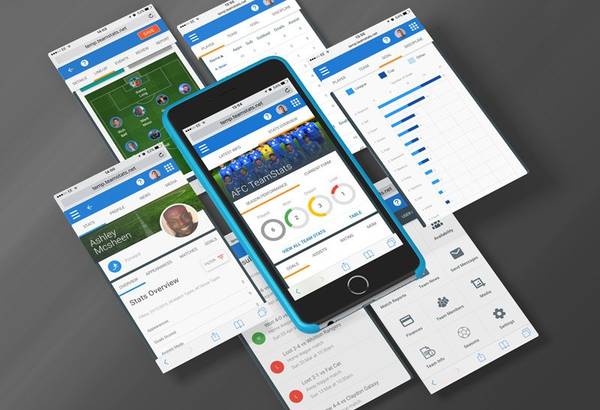
TeamStats provides this centralised approach for grassroots teams. Rather than coordinating across WhatsApp groups, email threads, and text messages, coaches update information once and all stakeholders receive notifications through their preferred channels. A fixture change entered by the manager automatically updates the team calendar, triggers notifications to opted-in parents, and adjusts availability tracking.
The key principle is write once, distribute everywhere. Coaches shouldn't manually copy information across multiple platforms. Parents shouldn't need to check three different places to confirm kick-off time. Players shouldn't receive conflicting messages about training content.
Streamlining Availability Tracking
Confirming player availability represents one of the most time-consuming youth team coordination tasks. Traditional methods involve individual messages to each family, manual tracking in spreadsheets, and follow-up reminders for non-responses.
A Buckinghamshire under-11s manager calculated spending 90 minutes weekly managing availability: sending initial requests, tracking responses, following up with non-responders, and confirming final numbers with coaches. Across a 30-week season, that's 45 hours on a single administrative task.
Automated availability tracking transforms this process. When fixtures are created in a centralised system, parents receive automatic availability requests. They respond with a single tap, and coaches see real-time updates showing confirmed, unavailable, and non-responding players.
This automation creates several benefits:
Reduced manager workload - Instead of individually messaging 15 families, managers create the fixture once and the system handles distribution and tracking. Follow-up reminders automatically reach non-responders after a set timeframe.
Earlier visibility - Coaches know by Wednesday evening which players are available for Saturday, allowing tactical preparation rather than last-minute squad assembly. Teams can arrange guest players from other age groups when numbers are low, rather than discovering shortages on match morning.
Parent accountability - When availability requests arrive through consistent channels with clear deadlines, families develop response habits. Systems that show which parents haven't responded allow managers to target follow-up communication rather than bothering families who've already confirmed.
Historical patterns - Digital tracking reveals attendance patterns over time. If a player consistently marks unavailable for Sunday fixtures, coaches can discuss scheduling challenges with the family and find solutions.
The football coaching apps used by progressive grassroots teams include availability tracking as standard functionality, eliminating the manual coordination that consumes volunteer managers' time.
Coordinating Multiple Coaches
Teams with specialist coaches - a head coach, assistant coach, goalkeeper coach, or age-group coordinator - face additional youth team coordination challenges. Each coach needs visibility into training plans, player development notes, and tactical approaches, whilst avoiding contradictory instructions that confuse players.
Shared planning tools allow coaches to coordinate preparation. When the head coach builds Monday's training session focusing on defensive transitions, the assistant coach sees this plan and prepares supporting activities. The goalkeeper coach knows which tactical system the outfield players are learning and aligns goalkeeper distribution training accordingly.
This coordination extends to match day. If the head coach can't attend a fixture, the assistant coach needs access to recent training focus, planned formation, and individual player development priorities. Without this information continuity, the replacement coach starts from scratch, disrupting player development.
Development tracking benefits enormously from multi-coach input. When the goalkeeper coach notes a young keeper's improving command of the penalty area, and the head coach observes the same player's growing confidence in distribution, these observations combine to create a comprehensive development picture. Parents value this coordinated feedback far more than isolated comments from individual coaches.
Age-Appropriate Communication Strategies
Youth team coordination approaches must adapt to player age and development stage. What works for under-8s creates problems for under-16s, and vice versa.
Foundation Phase (Under-7 to Under-11) - Parents are the primary communication audience. Players at this age rely on families for transport, equipment, and schedule management. Coordination systems should prioritise parent communication whilst introducing players to basic responsibilities like confirming their own availability with parental supervision.
Messages should include practical details parents need: exact pitch location, parking information, what equipment to bring, and weather-related updates. A Lincolnshire under-9s manager includes a "what to expect" section in fixture notifications, helping parents prepare children for match day.
Youth Development Phase (Under-12 to Under-16) - Players increasingly manage their own schedules and benefit from direct communication. However, parents still need visibility into fixtures, training schedules, and important updates.
Dual communication works effectively here: players receive tactical information and development feedback directly, whilst parents receive logistical details and availability requests. This approach respects growing player independence whilst maintaining necessary parent involvement.
Youth Phase (Under-17 to Under-18) - Players should be the primary communication audience, with parents receiving courtesy copies of major updates. Coordination systems that allow coaches to message players directly, with optional parent visibility, support age-appropriate independence.
Managing Information Overload
Whilst poor communication creates problems, excessive communication also frustrates stakeholders. Parents receiving 15 notifications weekly about minor updates start ignoring all messages, including critical information.
Strategic communication prioritises genuinely important updates:
Essential information - Fixture details, training times, pitch changes, cancellations, and safety-related updates always warrant communication. Parents need this information to fulfil their logistical responsibilities.
Valuable information - Match reports, development updates, and tactical explanations add value without requiring action. These updates should be easily accessible but not pushed as urgent notifications.
Optional information - Social activities, fundraising opportunities, and general club news interest some families more than others. Communication systems that allow stakeholders to opt into specific update categories prevent notification fatigue.
A Kent under-13s manager implemented a tiered communication approach: critical updates via push notification, weekly summaries via email, and optional content in a team feed that families check when interested. Parent satisfaction increased significantly because families received important information promptly without constant interruptions.
Building Communication Routines
Consistent communication patterns help stakeholders know when to expect information and what to do with it. Teams that establish predictable routines reduce coordination overhead.
Weekly routine example:
Sunday evening: Match availability request for the following weekend
Tuesday: Training session details and attendance confirmation
Wednesday: Availability deadline and follow-up reminders
Thursday: Confirmed squad and match day details
Friday: Final reminders and any last-minute changes
Saturday: Match day updates and post-match report
This predictability helps parents plan. They know Sunday evening brings the availability request, Wednesday is the response deadline, and Thursday confirms whether their child is selected. Families can organise their week around this consistent pattern.
Seasonal planning - Publishing fixture lists, training schedules, and tournament dates at season start allows families to identify conflicts early. A Birmingham under-12s team shares a season calendar in August, highlighting key dates when high attendance matters (cup matches, tournaments, presentation day). Parents book holidays around these priorities rather than discovering conflicts later.
Emergency protocols - Unexpected situations require clear communication chains. When weather threatens fixture cancellation, who makes the decision? How do families receive notification? What's the backup plan? Teams that document these protocols avoid match-morning confusion.
Measuring Coordination Success
Effective youth team coordination produces measurable improvements in team operation. Progressive managers track metrics that reveal coordination quality:
Response rates - What percentage of families respond to availability requests by the deadline? High response rates (above 85%) indicate families understand the system and find it convenient. Low response rates suggest communication isn't reaching families or the process is too complicated.
Training attendance - Consistent attendance reflects reliable communication and family engagement. Teams with strong coordination systems typically achieve 75-85% training attendance, compared to 60-70% for poorly coordinated teams.
Last-minute changes - How often do fixtures change within 48 hours of kick-off? Whilst some changes are unavoidable (weather, pitch issues), frequent last-minute changes suggest poor initial planning or inadequate opponent communication.
Parent satisfaction - Annual surveys asking families to rate communication quality, information accessibility, and coordination effectiveness reveal whether systems meet stakeholder needs. Open-ended feedback identifies specific improvement opportunities.
Coach time savings - Tracking weekly hours spent on administrative tasks versus coaching activities shows whether coordination systems achieve their primary goal: freeing volunteer coaches to focus on player development rather than admin.
Technology as the Coordination Foundation
Manual youth team coordination approaches struggle to scale beyond basic team management. Spreadsheets tracking availability require constant updates. WhatsApp groups become unwieldy with multiple coaches and 30 parents. Email threads bury critical information in reply chains.
Purpose-built team management platforms solve these coordination challenges. They centralise information, automate routine communications, track responses, and provide stakeholders with self-service access to schedules and updates.
The grassroots football community increasingly recognises that professional coordination tools aren't luxuries for elite academies - they're practical necessities for volunteer-run teams managing complex stakeholder groups.
When evaluating coordination technology, grassroots teams should prioritise:
Ease of use - If parents need training to confirm availability or coaches spend 20 minutes creating a fixture, the system creates work rather than saving it. Intuitive interfaces with minimal clicks drive adoption.
Mobile accessibility - Parents check updates on phones during commutes, not desktop computers at home. Mobile-optimised platforms with apps ensure information reaches stakeholders wherever they are.
Automated workflows - Systems should handle routine tasks automatically: sending availability requests when fixtures are created, reminding non-responders before deadlines, updating calendars when details change, and notifying stakeholders of relevant updates.
Flexible communication - Different stakeholders prefer different channels. Some parents want email summaries, others prefer push notifications, and some check a team feed when convenient. Platforms should accommodate these preferences rather than forcing everyone into a single communication method. Understanding what is grassroots football helps teams appreciate why coordination tools matter for community football sustainability.
Conclusion
Coordinating coaches, players, and parents effectively separates well-run grassroots teams from chaotic ones. When communication is clear, consistent, and centralised, teams spend less time on administration and more time on what matters: developing young footballers in a positive, organised environment.
The youth team coordination challenge intensifies as teams grow and stakeholder groups expand, but systematic approaches transform this complexity into manageable routines. Establishing a single source of truth eliminates information silos. Automated availability tracking recovers hours of volunteer time weekly. Age-appropriate communication strategies respect developmental stages whilst maintaining necessary parent involvement. Predictable communication patterns help families plan around football commitments.
Technology provides the foundation for modern youth team coordination. Manual methods that worked for small teams with simple schedules break down as coordination demands increase. Purpose-built platforms like TeamStats centralise information, automate routine tasks, and provide stakeholders with self-service access to the details they need.
The investment in proper coordination systems pays dividends throughout the season. Higher training attendance gives players more development opportunities. Reduced administrative burden allows coaches to focus on coaching rather than chasing responses. Transparent communication builds parent trust and engagement. Match days run smoothly because everyone knows their responsibilities and arrives prepared.
For grassroots football teams ready to move beyond WhatsApp chaos and spreadsheet juggling, exploring a comprehensive team management app represents the logical next step. The coordination challenges that consume volunteer managers' evenings and weekends become automated workflows that run themselves, freeing everyone involved to focus on why they joined grassroots football in the first place: helping young players develop, learn, and enjoy the beautiful game.
═══════════════════════════════════════════════════════════════